Indonesian scholar fights for religious minority rights

Khabar Southeast Asia

Indonesian scholar fights for religious minority rights

slam in Indonesia is fundamentally non-radical, says Muslim intellectual Dawam Rahardjo. [Yosita Nirbhaya/Khabar]

slam in Indonesia is fundamentally non-radical, says Muslim intellectual Dawam Rahardjo. [Yosita Nirbhaya/Khabar]

“There is freedom of religion in this country, but unfortunately religious freedom tends to be a source of conflict among Indonesia’s religious groups,” Dawam Rahardjo says.

Scholar Dawam Rahardjo won the 2013 Yap Thiam Hien Award for championing the rights of Indonesia’s religious minorities. An economist by training, Dawam headed the All-Indonesia Association of Muslim Intellectuals (ICMI) from 1995 to 2000, and currently leads the Institute of Religious and Philosophical Studies (LSAF).

In an interview with Khabar Southeast Asia, Dawam recalls challenges he has faced as an advocate of tolerance, and shares his thoughts about religious freedom.

Khabar: What does freedom of religion mean to you?

Dawam: Equality and tolerance are two main keys to religious freedom. Indonesia is more than 80% Muslim but it has diverse religions and beliefs. This is captured in its constitution, “believe in the divinity of God”.

There is freedom of religion in this country, but unfortunately religious freedom tends to be a source of conflict among Indonesia’s religious groups.

Khabar: If freedom of religion exists in Indonesia, why is there religious conflict?

Dawam: It is because of the lack of communication between the religious groups.

There is a separation between them that often leads to misunderstandings, so it is important to build an open, respectful dialogue. That is what I have been fighting for all this time, by myself or through my organisation.

However … my outspoken approach has drawn threats and intimidation. I was fired from Muhammadiyah, Indonesia’s second-largest Muslim organisation, for defending the Ahmadiyah group, whose practices were denounced in 2006 as deviant from Islam.

Khabar: Recently, religious conflict tends to happen in Java. Why?

Dawam: Religious conflict in West Java targeted the Ahmadiyah group while the religious conflict in East Java has targeted the Shia group the past few years. Saudi Arabia, which is dominated by Sunni Islam, is funding a number of local organisations to influence the Muslim community and limit the ability of both Shia and Ahmadiyah to grow.

The Indonesian government is not brave enough to stop those interventions because Indonesia is dependent upon Saudi Arabia for the Hajj to Mecca and the employment of Indonesian migrant workers in Saudi Arabia.

Khabar: What does the world need to know about Islam in Indonesia?

Dawam: There are many interpretations of Islam, ranging from fundamentalism and conservatism to liberal and traditional. Islam in Indonesia is not radical.

The fundamentalist group is in the minority, but they are brazen enough to speak out with their actions. However, sometimes we have to wonder whether they understand what they are doing, because some of them are being paid to join demonstrations, and they do not understand why they are there.

Khabar: What is the root of Indonesian radicalism?

Dawam: Radicalism is triggered by poverty. Fundamentalist groups allegedly pay poor people to perpetrate religious attacks to alter public perception.

Those poor people do not support the issue being protested; they just care about being paid. If the economic problem were fixed, the growth of radicalism would slow down or even stop. But that is a big homework assignment for the government.
Tropical Fruit Distributor: PT Sewu Segar Nusantara

Newsroom

Those of you who’ve recently shopped at one of the major convenience store chain in Jakarta would’ve noticed single banana in plastic packaging. The plastic-wrapped bananas are Sunpride Cavendish bananas. They are often misunderstood as an imported brand. Sunpride is actually a local tropical fruit brand by PT Sewu Segar Nusantara of Gunung Sewu Group. [continue reading]

Ornamental Plants Merchandising: PT Istana Alam Dewi Tara

Newsroom

The “Go Green” campaign has become a popular foundation for the establishment of new businesses ranging from the “green” laundry, “green” car wash, to “green” school. Today, we are going to look into a curious niche called the business of “green” souvenirs by PT Istana Alam Dewi Tara. [continue reading]

Cemeteries to Die For

Newsroom

The business of luxury cemeteries is growing in Indonesia. Today, the Indonesian upper middle class have several options of exclusive real estate to choose from for their final resting place. These cemeteries are far from the image of burial sites as a frightening space. Herein, we will talk about two of such cemeteries. [Continue reading]

Cemeteries to Die For

Newsroom

The business of luxury cemeteries is growing in Indonesia. Today, the Indonesian upper middle class have several options of exclusive real estate to choose from for their final resting place. These cemeteries are far from the image of burial sites as a frightening space. Herein, we will talk about two of such cemeteries. [continue reading]

People: Agus Santoso

People
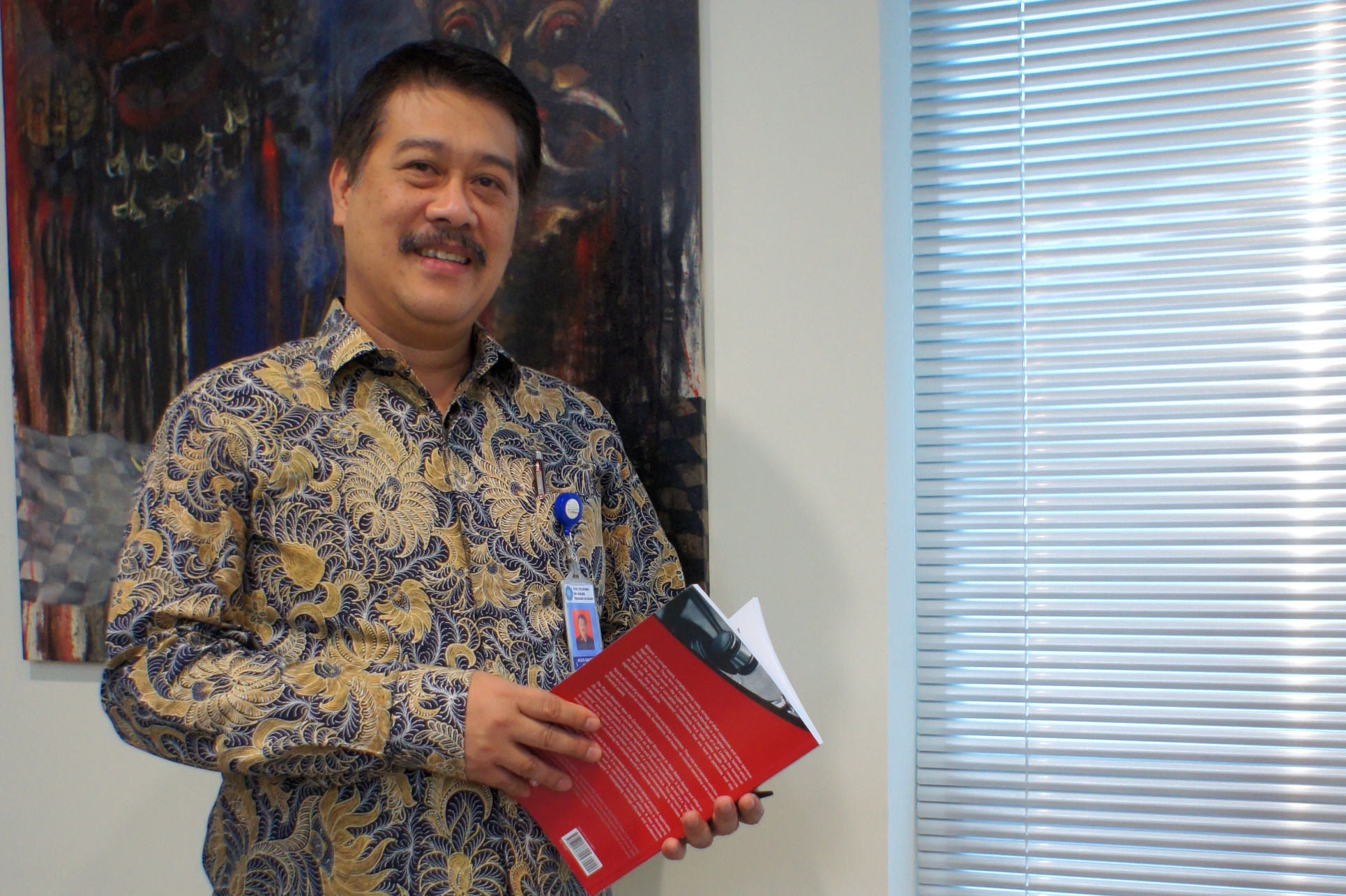
Agus Santoso, deputy chairman of the money-laundering watchdog PPATK, hopes Indonesia will have a new law targeting terrorist financing by February. The law would enable authorities to freeze bank accounts used to finance terrorism.

Agus Santoso, deputy chairman of the money-laundering watchdog PPATK, hopes Indonesia will have a new law targeting terrorist financing by February. The law would enable authorities to freeze bank accounts used to finance terrorism.

Name              : Agus Santoso

Place of Birth  : Purwokerto, Central Java

Date of Birth   : 9 Agustus 1960

Job tittle          : Deputy chairman of the Financial Transaction Reports and Analysis Center (PPATK)

Wife                : Juli Widiastuti SH

Website          : www.agussantoso.org

Related article

  1. Indonesia prepares terror financing law

People: Ansyaad Mbai

People

Terrorism remains a real threat in Indonesia, and the target has shifted to the "near enemy", Indonesian police chief of the National Counterterrorism Agency (BNPT), Ansyaad Mbai told Khabar Southeast Asia in an exclusive interview last week. [2013: Oktofani]

Terrorism remains a real threat in Indonesia, and the target has shifted to the “near enemy”, Indonesian police chief of the National Counterterrorism Agency (BNPT), Ansyaad Mbai told Khabar Southeast Asia in an exclusive interview last week. [2013: Oktofani]

Name             : Inspector General (Retired) Ansyaad Mbai

Job tittle         : Head of National Agency for Combating Terrorism (BNPT)

Place of Birth : Buton, Southeast Sulawesi

Date of Birth  : 2 June 1948

Related article about Ansyaad Mbai:

  1. Bomb-makers getting more sophisticated: Ansyaad Mbai
  2. Indonesia: Following the money to new terror funding tactics
  3. Indonesia preparing amendment to terrorism laws: Ansyaad Mbai

New MataMassa app empowers regular people to help monitor elections

Khabar Southeast Asia

New MataMassa app empowers regular people to help monitor elections

by: Yositha Nirbhaya

Free mobile application encourages citizens to monitor violations during the election, inviting greater engagement in the democratic process.

A smartphone app offers greater Jakarta area residents a way to help ensure free and fair upcoming 2014 general elections.

The Jakarta branch of the Alliance of Independent Journalists (AJI) and the ICT Laboratory for Social Changes (iLab) launched MataMassa (“Eyes of the Public”) in November as a way for citizens to monitor and anonymously report administrative, criminal or ethical violations during voting or campaigning.

Those could include installation of campaign banners in houses of worship, highways, or hospitals; vote buying; or other violations as defined by the General Election Committee (KPU) and the Election Supervisory Committee (Bawaslu).

Nelson Simanjuntak, Bawaslu committee commissioner, said the app encourages direct societal participation of the process.

“It needs to be understood that MataMassa really helps us improve the 2014 election,” he told Khabar Southeast Asia.

Users can download MataMassa for free and use it to submit a report of a violation by text, photo or video to AJI Jakarta. Project personnel investigate and submit verified reports to Bawaslu.

Between December 15th last year and March 13th, MataMassa received 1,249 reports, and verified 1,154 of them, according to AJI. Because of limited funding, project personnel could only verify violations in Jakarta and outskirts including Bogor, Depok, Tangerang and Bekasi, AJI Jakarta Chairman Umar Idris told Khabari.

Direct participation

Renanda Laksita, a Partai Demokrat candidate for the House of Representatives (DPR) wished the app could be more widely used.

“I think this is a new innovation to invite society to participate in our democratic process, as we know that many Indonesian people love to use gadgets. I hope society takes advantage of it,” the candidate from Bali told Khabar.

“It would be better if it is applicable all over Indonesia than greater Jakarta only,” she added.

Stefani Bilwa tried, but failed to submit a violation in the form of a massive poster of a candidate in Setiabudi.

“Unfortunately, I was unlucky in submitting it directly through my iPhone,” she told Khabar. “Therefore I have to submit it through the website, which is not as efficient.” Still, Stefani liked the idea of the app to help deliver a fair election.

Reports can also be submitted through SMS center to 081370202014 or via email at lapor@matamassa.org for people without a smartphone or the app.

People: Umar Patek

People

Umar Patek, an accused bombmaker in the 2002 Bali attacks, was speaking to reporters in West Jakarta District Court [2012: Oktofani]

Umar Patek, an accused bombmaker in the 2002 Bali attacks, was speaking to reporters in West Jakarta District Court [2012: Oktofani]

Name              : Hisyam bin Ali Zein

Alias                : Umar Patek alias Umar, Abu Syekh, Arsalan, Abdul Karim, Umar Arab, Umar Syekh, Zacky dan Anis Alawi Jafar.

Date of birth    : 20 Juli 1970

Place of birth  : Pemalang, East Java

Wife                : Fatimah Azzahra binti Husein Luceno alias Ruqoyah

Case               : 2002 Bali Bomb

Summary        : Umar Patek was found guilty of murder and bomb-making in connection with the Bali attacks, which killed more than 200 people, mostly foreigners. West Jakarta District Court has convicted a militant of making explosives used in the deadly 2002 Bali bombings and sentenced him to 20 years in jail in 2012.

On March 2014, Umar Patek was relocated from the Brimob prison in Kelapa Dua, Depok, West Java to Porong Penitentiary in Sidoarjo, East Java. The relocation was due to the police’s efforts to uncover a regional terrorism network.

Related article about Umar Patek:

  1. Witnesses: Loopholes in system helped Patek flee
  2. Patek: Bali bombings were “against my conscience”
  3. Prosecutors seek life sentence for remorseful Patek
  4. Witness: Patek said terror attacks were against Islam
  5. Judge: Patek can help deter youth from radical extremism
  6. Patek lawyers: client didn’t know what bombs were for
  7. Money for Bali bombing came from bin Laden, witnesses say
  8. Bali suspect apologises to victims, says bombings were wrong
  9. Muslim leader: terrorists must stop undermining Islam’s image

Indonesian candidates add social media to campaign arsenals

Khabar Southeast Asia

Indonesian candidates add social media to campaign arsenals

Yosita Nirbhaya

The Institute for Policy Research and Advocacy's (Elsam) Wahyudi Djafar speaks at the "Challenges to Freedom of Expression in the Online World" forum in Jakarta on January 21st. [Yosita Nirbhaya/Khabar]

The Institute for Policy Research and Advocacy’s (Elsam) Wahyudi Djafar speaks at the “Challenges to Freedom of Expression in the Online World” forum in Jakarta on January 21st. [Yosita Nirbhaya/Khabar]

Candidates are using twitter, Facebook and other social networks for the electoral pushes

Politicians running in the 2014 Indonesian elections are not relying solely on traditional campaigning to win votes.

Hopefuls in the legislative and presidential races are going online and reaching out to Indonesia’s huge social media audience, using Twitter, Facebook and YouTube to spread their messages.

One voter who has been getting to know the candidates via social media, is university student Abimata Putra, 23.

“I think knowing the character and the profile of political candidates is very important. They will make decisions and regulations for society, including for me,” he told Khabar Southeast Asia.

Among Twitter-savvy candidates are Prabowo Subianto, presidential contender from the Great Indonesia Movement Party (Gerindra) and Wiranto, one of his rivals in the July 9th election, who represents the People’s Conscience Party (Hanura). Respectively, the two use “@prabowo08” and “@wiranto1947” as Twitter handles.

Gerindra’s account has more than 147,000 followers, according to Setyoko, a member of the party’s online media team. He created the account to interact with supporters, he told Khabar.

“Social media gives politicians and political parties a chance to have a direct interaction with constituents,” said Wahyudi Djafar, a representative of the Institute for Policy Research and Advocacy (Elsam).”They must pay attention to the use of social media, and where it should reflect the principles of democracy.”

Indonesia’s online boom

Politicians and their parties are trying to reach voters via the Internet and mobile phone-driven social media networks exploding in Indonesia.

According to the Indonesian Association of Internet Service Providers (APJII), 62 million Indonesians – nearly a quarter of the total population – used the Internet regularly in 2013.

And according to January 2014 statistics from wearesocial.net, 62 million are social media users– 52 million of whom rely on mobile phones to access social media networks.

Although Indonesia ranks among the top five countries for social media penetration, according to government data, Internet use is less evenly distributed across the archipelago.

The Ministry of Communication and Information Technology says that 70% of Internet users are concentrated on Java, mostly in the Jakarta area.

Young people and members of the country’s middle class are primary users of social media, activist Enda Nasution told Khabar. Twitter, Facebook and other networks allow Indonesians to express themselves and also obtain free access to online information, Enda said.