Anyone, who wants to run a business or trying to get a political support from the society in Yogyakarta province, needs to build a relationship with Yogyakarta Sultanate family member. It is because Yogyakarta Sultanate is believed to have a certain power to influence the local authority in the issuance of important business permits as well as influencing local residents in supporting certain political party, where the member of Yogyakarta Sultanate family belong to. [continue reading]
Indonesia
Indonesian scholar fights for religious minority rights
Khabar Southeast AsiaIndonesian scholar fights for religious minority rights
![slam in Indonesia is fundamentally non-radical, says Muslim intellectual Dawam Rahardjo. [Yosita Nirbhaya/Khabar]](https://oktofani.com/wp-content/uploads/2014/04/img_8326-copy.jpg)
slam in Indonesia is fundamentally non-radical, says Muslim intellectual Dawam Rahardjo. [Yosita Nirbhaya/Khabar]
“There is freedom of religion in this country, but unfortunately religious freedom tends to be a source of conflict among Indonesia’s religious groups,” Dawam Rahardjo says.
Scholar Dawam Rahardjo won the 2013 Yap Thiam Hien Award for championing the rights of Indonesia’s religious minorities. An economist by training, Dawam headed the All-Indonesia Association of Muslim Intellectuals (ICMI) from 1995 to 2000, and currently leads the Institute of Religious and Philosophical Studies (LSAF).
In an interview with Khabar Southeast Asia, Dawam recalls challenges he has faced as an advocate of tolerance, and shares his thoughts about religious freedom.
Khabar: What does freedom of religion mean to you?
Dawam: Equality and tolerance are two main keys to religious freedom. Indonesia is more than 80% Muslim but it has diverse religions and beliefs. This is captured in its constitution, “believe in the divinity of God”.
There is freedom of religion in this country, but unfortunately religious freedom tends to be a source of conflict among Indonesia’s religious groups.
Khabar: If freedom of religion exists in Indonesia, why is there religious conflict?
Dawam: It is because of the lack of communication between the religious groups.
There is a separation between them that often leads to misunderstandings, so it is important to build an open, respectful dialogue. That is what I have been fighting for all this time, by myself or through my organisation.
However … my outspoken approach has drawn threats and intimidation. I was fired from Muhammadiyah, Indonesia’s second-largest Muslim organisation, for defending the Ahmadiyah group, whose practices were denounced in 2006 as deviant from Islam.
Khabar: Recently, religious conflict tends to happen in Java. Why?
Dawam: Religious conflict in West Java targeted the Ahmadiyah group while the religious conflict in East Java has targeted the Shia group the past few years. Saudi Arabia, which is dominated by Sunni Islam, is funding a number of local organisations to influence the Muslim community and limit the ability of both Shia and Ahmadiyah to grow.
The Indonesian government is not brave enough to stop those interventions because Indonesia is dependent upon Saudi Arabia for the Hajj to Mecca and the employment of Indonesian migrant workers in Saudi Arabia.
Khabar: What does the world need to know about Islam in Indonesia?
Dawam: There are many interpretations of Islam, ranging from fundamentalism and conservatism to liberal and traditional. Islam in Indonesia is not radical.
The fundamentalist group is in the minority, but they are brazen enough to speak out with their actions. However, sometimes we have to wonder whether they understand what they are doing, because some of them are being paid to join demonstrations, and they do not understand why they are there.
Khabar: What is the root of Indonesian radicalism?
Dawam: Radicalism is triggered by poverty. Fundamentalist groups allegedly pay poor people to perpetrate religious attacks to alter public perception.
Those poor people do not support the issue being protested; they just care about being paid. If the economic problem were fixed, the growth of radicalism would slow down or even stop. But that is a big homework assignment for the government.
Tropical Fruit Distributor: PT Sewu Segar Nusantara
NewsroomThose of you who’ve recently shopped at one of the major convenience store chain in Jakarta would’ve noticed single banana in plastic packaging. The plastic-wrapped bananas are Sunpride Cavendish bananas. They are often misunderstood as an imported brand. Sunpride is actually a local tropical fruit brand by PT Sewu Segar Nusantara of Gunung Sewu Group. [continue reading]
Ornamental Plants Merchandising: PT Istana Alam Dewi Tara
NewsroomThe “Go Green” campaign has become a popular foundation for the establishment of new businesses ranging from the “green” laundry, “green” car wash, to “green” school. Today, we are going to look into a curious niche called the business of “green” souvenirs by PT Istana Alam Dewi Tara. [continue reading]
Cemeteries to Die For
NewsroomThe business of luxury cemeteries is growing in Indonesia. Today, the Indonesian upper middle class have several options of exclusive real estate to choose from for their final resting place. These cemeteries are far from the image of burial sites as a frightening space. Herein, we will talk about two of such cemeteries. [Continue reading]
Cemeteries to Die For
NewsroomThe business of luxury cemeteries is growing in Indonesia. Today, the Indonesian upper middle class have several options of exclusive real estate to choose from for their final resting place. These cemeteries are far from the image of burial sites as a frightening space. Herein, we will talk about two of such cemeteries. [continue reading]
FPI Spokesperson Munarman
NewsroomMunarman is a widely known name in the circles of Indonesian human rights activists. He is very popular, but not in a good way. Munarman was once a human rights activist but he then made a 180-degree turn and became the spokesperson of the notorious Islamic Defenders Front (FPI), the notorious community organization responsible for countless acts of violence. [continue reading]
People: Agus Santoso
People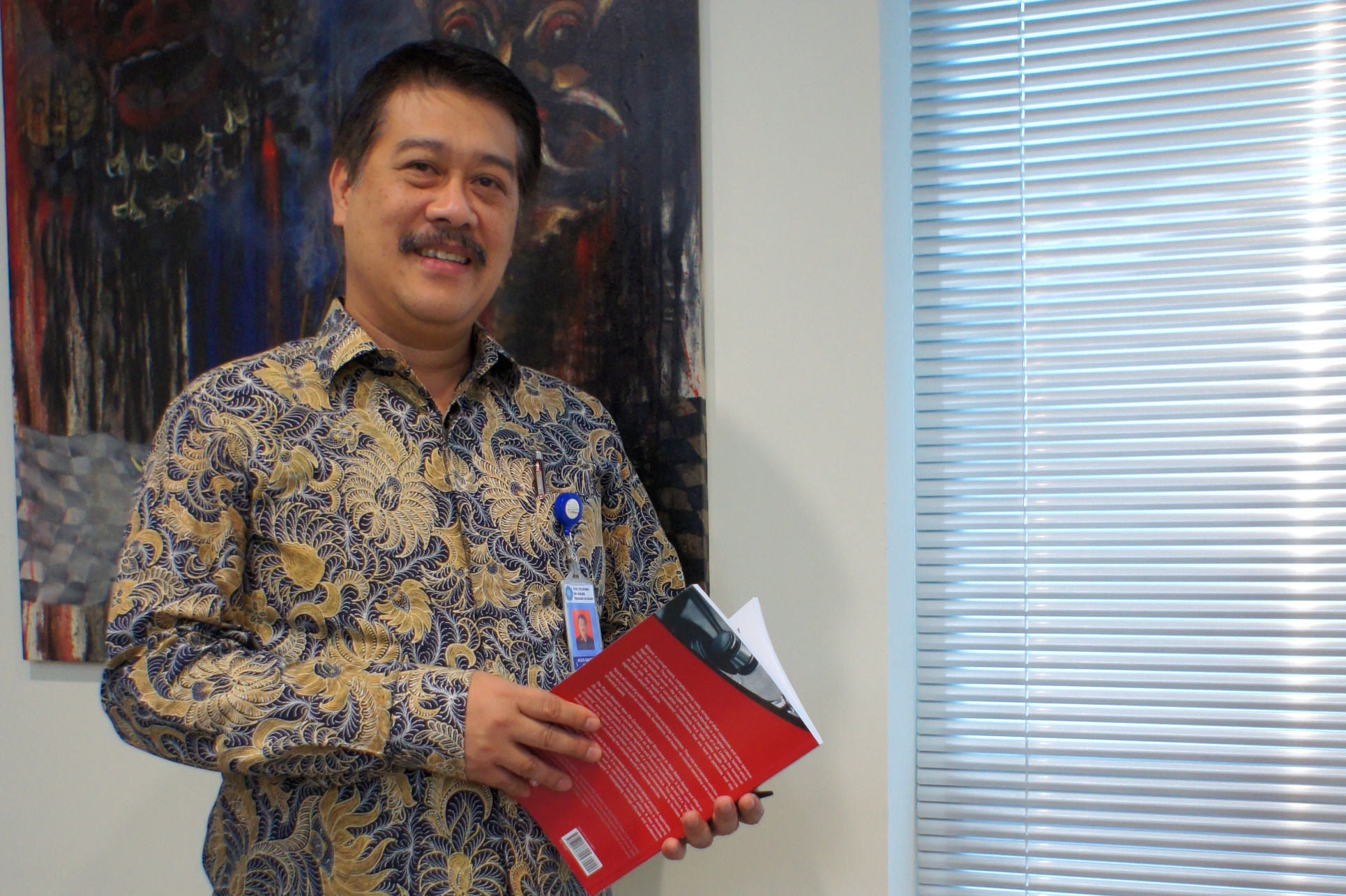
Agus Santoso, deputy chairman of the money-laundering watchdog PPATK, hopes Indonesia will have a new law targeting terrorist financing by February. The law would enable authorities to freeze bank accounts used to finance terrorism.
Name : Agus Santoso
Place of Birth : Purwokerto, Central Java
Date of Birth : 9 Agustus 1960
Job tittle : Deputy chairman of the Financial Transaction Reports and Analysis Center (PPATK)
Wife : Juli Widiastuti SH
Website : www.agussantoso.org
Related article
People: Ansyaad Mbai
People![Terrorism remains a real threat in Indonesia, and the target has shifted to the "near enemy", Indonesian police chief of the National Counterterrorism Agency (BNPT), Ansyaad Mbai told Khabar Southeast Asia in an exclusive interview last week. [2013: Oktofani]](https://oktofani.com/wp-content/uploads/2012/10/dsc03891.jpg)
Terrorism remains a real threat in Indonesia, and the target has shifted to the “near enemy”, Indonesian police chief of the National Counterterrorism Agency (BNPT), Ansyaad Mbai told Khabar Southeast Asia in an exclusive interview last week. [2013: Oktofani]
Job tittle : Head of National Agency for Combating Terrorism (BNPT)
Place of Birth : Buton, Southeast Sulawesi
Date of Birth : 2 June 1948
Related article about Ansyaad Mbai:
New MataMassa app empowers regular people to help monitor elections
Khabar Southeast AsiaNew MataMassa app empowers regular people to help monitor elections
by: Yositha Nirbhaya
Free mobile application encourages citizens to monitor violations during the election, inviting greater engagement in the democratic process.
A smartphone app offers greater Jakarta area residents a way to help ensure free and fair upcoming 2014 general elections.
The Jakarta branch of the Alliance of Independent Journalists (AJI) and the ICT Laboratory for Social Changes (iLab) launched MataMassa (“Eyes of the Public”) in November as a way for citizens to monitor and anonymously report administrative, criminal or ethical violations during voting or campaigning.
Those could include installation of campaign banners in houses of worship, highways, or hospitals; vote buying; or other violations as defined by the General Election Committee (KPU) and the Election Supervisory Committee (Bawaslu).
Nelson Simanjuntak, Bawaslu committee commissioner, said the app encourages direct societal participation of the process.
“It needs to be understood that MataMassa really helps us improve the 2014 election,” he told Khabar Southeast Asia.
Users can download MataMassa for free and use it to submit a report of a violation by text, photo or video to AJI Jakarta. Project personnel investigate and submit verified reports to Bawaslu.
Between December 15th last year and March 13th, MataMassa received 1,249 reports, and verified 1,154 of them, according to AJI. Because of limited funding, project personnel could only verify violations in Jakarta and outskirts including Bogor, Depok, Tangerang and Bekasi, AJI Jakarta Chairman Umar Idris told Khabari.
Direct participation
Renanda Laksita, a Partai Demokrat candidate for the House of Representatives (DPR) wished the app could be more widely used.
“I think this is a new innovation to invite society to participate in our democratic process, as we know that many Indonesian people love to use gadgets. I hope society takes advantage of it,” the candidate from Bali told Khabar.
“It would be better if it is applicable all over Indonesia than greater Jakarta only,” she added.
Stefani Bilwa tried, but failed to submit a violation in the form of a massive poster of a candidate in Setiabudi.
“Unfortunately, I was unlucky in submitting it directly through my iPhone,” she told Khabar. “Therefore I have to submit it through the website, which is not as efficient.” Still, Stefani liked the idea of the app to help deliver a fair election.
Reports can also be submitted through SMS center to 081370202014 or via email at lapor@matamassa.org for people without a smartphone or the app.
 Oktofani's Page