People: Ansyaad Mbai

People

Terrorism remains a real threat in Indonesia, and the target has shifted to the "near enemy", Indonesian police chief of the National Counterterrorism Agency (BNPT), Ansyaad Mbai told Khabar Southeast Asia in an exclusive interview last week. [2013: Oktofani]

Terrorism remains a real threat in Indonesia, and the target has shifted to the “near enemy”, Indonesian police chief of the National Counterterrorism Agency (BNPT), Ansyaad Mbai told Khabar Southeast Asia in an exclusive interview last week. [2013: Oktofani]

Name             : Inspector General (Retired) Ansyaad Mbai

Job tittle         : Head of National Agency for Combating Terrorism (BNPT)

Place of Birth : Buton, Southeast Sulawesi

Date of Birth  : 2 June 1948

Related article about Ansyaad Mbai:

  1. Bomb-makers getting more sophisticated: Ansyaad Mbai
  2. Indonesia: Following the money to new terror funding tactics
  3. Indonesia preparing amendment to terrorism laws: Ansyaad Mbai

People: Umar Patek

People

Umar Patek, an accused bombmaker in the 2002 Bali attacks, was speaking to reporters in West Jakarta District Court [2012: Oktofani]

Umar Patek, an accused bombmaker in the 2002 Bali attacks, was speaking to reporters in West Jakarta District Court [2012: Oktofani]

Name              : Hisyam bin Ali Zein

Alias                : Umar Patek alias Umar, Abu Syekh, Arsalan, Abdul Karim, Umar Arab, Umar Syekh, Zacky dan Anis Alawi Jafar.

Date of birth    : 20 Juli 1970

Place of birth  : Pemalang, East Java

Wife                : Fatimah Azzahra binti Husein Luceno alias Ruqoyah

Case               : 2002 Bali Bomb

Summary        : Umar Patek was found guilty of murder and bomb-making in connection with the Bali attacks, which killed more than 200 people, mostly foreigners. West Jakarta District Court has convicted a militant of making explosives used in the deadly 2002 Bali bombings and sentenced him to 20 years in jail in 2012.

On March 2014, Umar Patek was relocated from the Brimob prison in Kelapa Dua, Depok, West Java to Porong Penitentiary in Sidoarjo, East Java. The relocation was due to the police’s efforts to uncover a regional terrorism network.

Related article about Umar Patek:

  1. Witnesses: Loopholes in system helped Patek flee
  2. Patek: Bali bombings were “against my conscience”
  3. Prosecutors seek life sentence for remorseful Patek
  4. Witness: Patek said terror attacks were against Islam
  5. Judge: Patek can help deter youth from radical extremism
  6. Patek lawyers: client didn’t know what bombs were for
  7. Money for Bali bombing came from bin Laden, witnesses say
  8. Bali suspect apologises to victims, says bombings were wrong
  9. Muslim leader: terrorists must stop undermining Islam’s image

Victims of violence hope to change terrorist mindset

Khabar Southeast Asia

Victims of violence hope to change terrorist mindset

Sudirman Abdul Talib, 31, a victim of the 2004 Australian Embassy bombing, believes some terrorists do not understand the impact of their actions. [Elisabeth Oktofani/Khabar]

Sudirman Abdul Talib, 31, a victim of the 2004 Australian Embassy bombing, believes some terrorists do not understand the impact of their actions. [Elisabeth Oktofani/Khabar]

Those who have suffered at the hands of violent extremists believe some recruits will be moved to repent once they understand how terrorism destroys lives.

Victims of terrorism gathered on Sunday (September 8th) to commemorate a tragic episode in Jakarta’s recent history – namely, the 9th anniversary of the 2004 Australian Embassy bombing, which killed nine people and wounded at least 150 others.

“Many people might have forgotten [about the incident]. But I think it is important to make them aware that the terrorists’ victims do exist, and we are still struggling with the aftermath of the attacks,” said Mulyono Sutrisman, chairman of the Kuningan Forum, an association of people who have been affected by extremist violence.

Such atrocities must not happen again, he said at the event, which was sponsored by Alliance for Peaceful Indonesia (AIDA)

Sudirman Abdul Talib, 31, is a former security guard at the embassy. He lost his left eye in the attack and suffers from a permanent disability affecting both of his hands.

“As victims, we want to be involved in the government’s deradicalisation programme, in eliminating terrorism and preventing the growth of violent extremism in Indonesia,” Sudirman told Khabar Southeast Asia.

He believes that if all victims are united against terrorism and promote peace, it will make a difference in the future.

“We just want to be involved in making Indonesia more peaceful,” he added.

Sudirman, who now works as an administrative staff member for the security guard department, says he does not want to become a prisoner of the trauma he experienced. He believes his story can be used to change the minds of those who have been misled by violent and extremist groups.

“I have met a few former convicted terrorists. I told them about the impact of the terrorism. They were shocked and cried. They regretted their actions and apologised,” Sudirman said. “It is clear to see that sharing and explaining the impact of terrorism on the victims is an effective method to convince them [terrorists] to stop their actions.”

A crucial role in combating extremist notions

The director of AIDA, Hasibullah Satrawi, said that Indonesia has the potential to win the battle against terrorism – not only because of law enforcement efforts, but also because victims of terrorism have been willing to join in efforts to combat it.

“The victims play a strategic role in bringing Indonesia to a more peaceful place,” he said. Therefore, it is very important to empower the victims – whether mentally, physically, or financially.”

Al Chaidar, a terrorism analyst, agreed that those affected by violence have great potential to combat recruitment by extremist groups. He agreed that the government should involve victims of terrorist activity in deradicalisation programmes.

“By meeting and seeing the victims, the terrorists would consider the actions that they are going to take because they have seen the impact of their attacks,” he added.

Sudirman, the wounded security guard, says he is troubled that his hometown of Bima, in West Nusa Tenggara, is being appropriated by terrorists as a base for planning their attacks. In 2011, police raided the local Umar bin Khattab Muslib Boarding School, where they found bomb-making materials as well as weapons and jihadist videos.

“Bima is a very religious place,” Sudirman said. Muslims pray five times a day and have strong faith. As far as I know, they are not radical people. They need moderate religious leaders to tell them that Islam is actually a religion of peace,” he said.

Those vulnerable to the message of radical terrorists need to be aware of the consequences of violence, he reiterated. “They need to meet people just like us to show them the impact of terrorist acts. It is also hurting Muslims as well,” Sudirman said.

Indonesian police savvy about social media

Khabar Southeast Asia

Indonesian police savvy about social media

About 100 people attended the event, which brought together police, civil society and social media. Their collaboration is important in the face of growing cyber-crime [2013: Oktofani]

About 100 people attended the event, which brought together police, civil society and social media. Their collaboration is important in the face of growing cyber-crime [2013: Oktofani]

Police are using Facebook to increase public awareness about the law and cyber-crime, and to foster a closer relationship with citizens.

Indonesian law enforcement personnel are using social media to interact with citizens, and are also monitoring the use of online communication tools by criminal elements.

On May 16th, police hosted a Facebookers’ Meeting for followers of the National Police Facebook page, at the National Police Headquarters in Jakarta. The three-hour event was attended by approximately 100 people from various places including Jakarta, Bandung, and Jambi, Sumatra.

Launched in 2010, the National Police Facebook page has attracted more than 86,000 followers. The page contains important information for citizens: how to renew a vehicle registration, traffic conditions, traffic violations fine list, and the news on law enforcement operations.

Police are hoping to use social media to help citizens protect themselves amid an alarming growth of crime in cyberspace, officials said.

“We have been well aware that many criminals have been taking advantage of technological advances, including the growth of social media,” National Police spokesman Boy Rafli Amar told the gathering.

“It is very concerning for us because there are many crimes occurring and starting in cyberspace,” he added.

“A young girl was kidnapped by her boyfriend that she met on Facebook. Another example of cyber-crime is an online shopping fraud,” he said.

Some people use Facebook specifically to commit crimes, he warned. “Therefore, it is very important for us to anticipate it together,” Boy said. “By establishing regular communication with civil society on social networks, we hope that we can minimise the number of criminal victims.”

Indonesian police receive at least 800,000 reports of cyber-crime annually, according to The Jakarta Globe, which cited Sutarman, chief of detectives for the National Police.

“Cyber-crimes are often related to other crimes like terrorism funding and communication between terrorism suspects. And the intensity of the cyber criminals is also alarming,” The Globe quoted him as saying.

Raising awareness

Police used the gathering to raise awareness of Law No 11 of 2008 on Electronic Information and Transactions, Law No 22 of 2009 on the Mechanism of Vehicle Registration Licence Issuance and Renewal, and a 2008 law on Transparency of Public Information.

Top officials from the Jakarta Police (Polda Metro Jaya), representing the Traffic Directorate, the Division of Professionalism and Security, and the General Crimes Directorate, also addressed the group and fielded questions.

The primary issue raised by participants was extortion, which they said was practiced by some police officers, including traffic officers.

“If there is an officer who abused their position, society should report it to us. We would take serious action against them,” Hari Harnowo, a top official from the Division of Professionalism and Security (Propam), said in response.

Finding solutions together

One participant said he appreciated the chance to interact directly with police.

“This is a very good event because it gives us a chance to have a direct two-way communications with police,” Surbaini, a 50 year-old participant from Jambi, told Khabar Southeast Asia.

“In my opinion, we do not come here to blame police for the wrong doing that the police did. But we gathered here to talk about the issue and find a solution together,” he said.

Indonesia prepares terror financing law

Khabar Southeast Asia

Indonesia prepares terror financing law

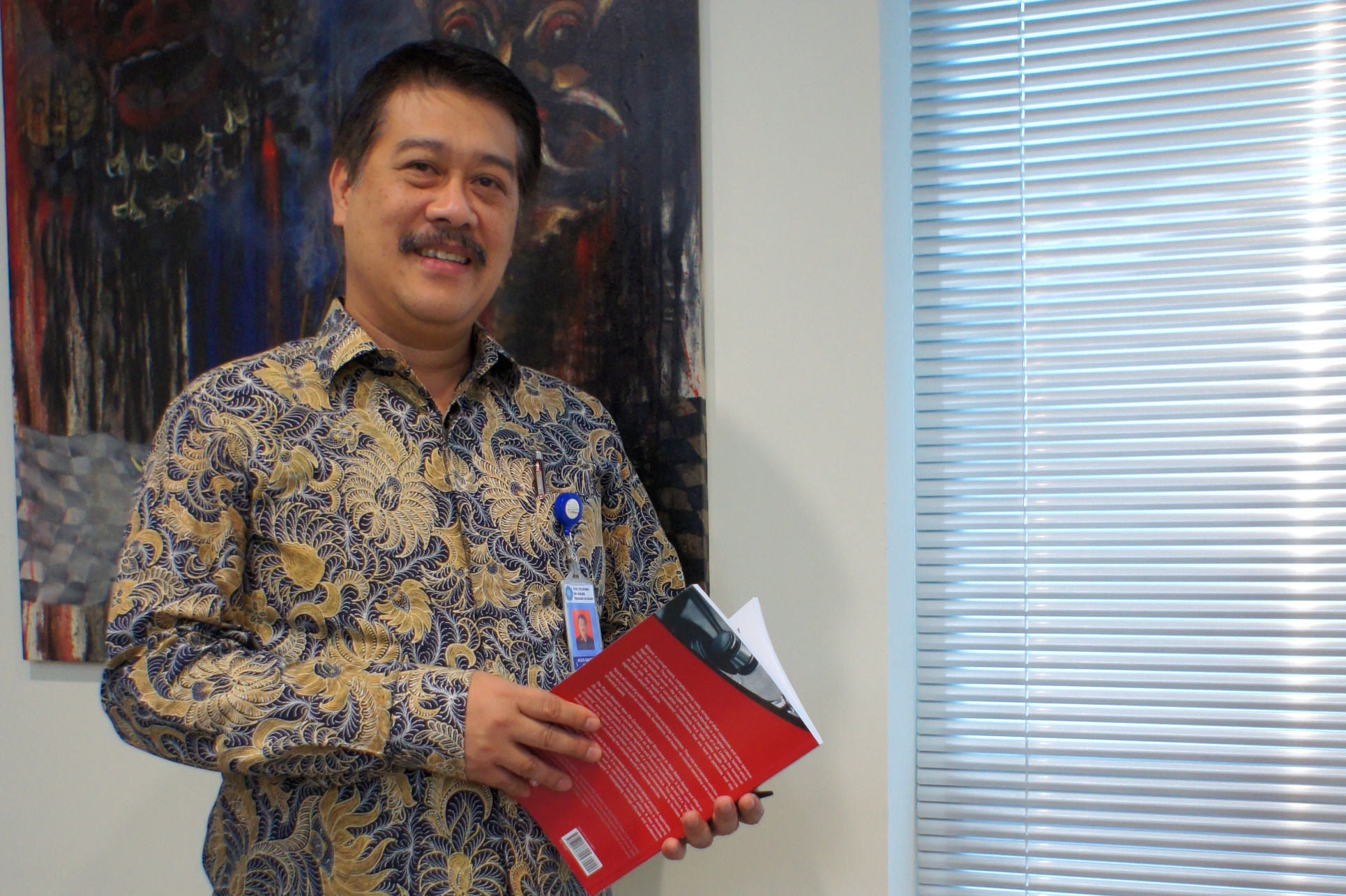
Agus Santoso, deputy chairman of the money-laundering watchdog PPATK, hopes Indonesia will have a new law targeting terrorist financing by February. The law would enable authorities to freeze bank accounts used to finance terrorism.

Agus Santoso, deputy chairman of the money-laundering watchdog PPATK, hopes Indonesia will have a new law targeting terrorist financing by February. The law would enable authorities to freeze bank accounts used to finance terrorism. [2012: Oktofani]

New legislation will enable authorities to seize assets and freeze bank accounts.

Indonesia hopes to have a potent new weapon against terrorism this year: a law enabling authorities to freeze bank accounts or seize assets of terrorists and those who finance them.

The law will create the legal mechanisms needed to target terror financing, according to Agus Santoso, deputy chairman of the Financial Transaction Reports and Analysis Centre (PPATK), an independent institution charged with fighting money laundering and other financial crimes.

“We have been working on this regulation for the past three years. We really hope that it will pass by February 2013,” he said, adding that the law is urgently needed.

From January to July 2012, financial service providers reported 191 suspicious financial transactions to PPATK. Analysis of the transactions found that 48 were linked to terrorism financing.

The proposed law is not the result of pressure from other nations, Agus said. “We know for a fact that Indonesia has been threatened with terrorism for many years. Therefore, our need for this law is real,” he said.

Terrorism risk undermines economy

Although the country insists it does not need outside pressure in order to act, experts acknowledge there is a concern about meeting global standards.

“Indonesia is one of two G-20 countries that does not have regulations regarding the funding of terror-related activities,” Santoso said.

On December 12th, Indonesian Finance Minister Agus Martowardojo said the timing is becoming urgent. Without the new statute, international institutions such as the Financial Action Task Force (FATF) could label Indonesia a non-cooperative jurisdiction, he told reporters.

“It needs to be passed soon because FATF will review Indonesia in 2013. We need that law to be able to say that Indonesia has a law to prevent funding for terrorists,”
he said. “If we are downgraded to a non-cooperative jurisdiction, we will be put on the same level as countries unworthy of international financial transactions.”

Being labeled “unworthy” could hurt the country’s economy, the finance minister added.

Militants find innovative ways to obtain funds

Recent incidents underscore the need for updated legislation as extremist cells find sophisticated new ways of drumming up money.

In May 2012, the anti-terror squad Detachment 88 captured 11 individuals suspected of hacking into multilevel marketing websites and stealing some 8 billion rupiah ($835,000). The money allegedly was used to finance terrorist activities such as terrorist trainings in Poso, Central Sulawesi and to produce explosive devices used in churches.

Rizki Gunawan and Cahya Fitriyanta, two of 11 alleged terrorist hackers, are currently on trial in West Jakarta District Court, charged under the 2003 Anti-Terrorism Law and the 2010 Anti-Money Laundering Law.

According to Agus, however, the existing laws do not precisely fit the alleged crimes, demonstrating the need for a new legislation.

In particular, he said, the 2010 Anti-Money Laundering Law “does not specifically regulate the terrorism financing system,” he said, adding that a Counter Terrorism Financing Law would close the gap.

The new law will be strictly implemented and applied to anyone who finances terrorism activity, he stressed.

“The person does not have to be a terrorist. Any individual or organisation that supports terrorist activity will be subject to this law,” he said.

Concerns over implementation

Ordinary citizens told Khabar that the government should also work to make the Indonesian public better aware of the dangers.

Taufan Restu Putra, a 32 year-old Jakarta resident, said he appreciates government efforts to protect Indonesian citizens and the Indonesian financial system with this new law, but he expressed some concern about how it would be implemented.

“What if somehow a terrorist asked me for financial support, but he didn’t tell me the truth that the money will be used to finance terrorist activity? Will I also be charged because I am considered to have supported terrorist activity?” he commented.

“I think the government needs to publicize the regulation properly as soon as it is passed – especially in the remote villages and also the mosques. So that anyone who has a good intention to give to a charity will not be manipulated by terrorists to gain financial support,” he said.

Indonesia nets alleged HASMI militants

Khabar Southeast Asia

Indonesia nets alleged HASMI militants

The terror network has deep Islamist roots – and a training camp in East Java, authorities and experts say.

Anti-terrorism forces in Indonesia have arrested three men in Central Java who allegedly stored explosives for Abu Hanifah, leader of the Sunni Movement for Indonesian Society (HASMI).

The men, identified as Winduro bin Nur Hadi, 28, Feri Susanto, 23, and Bambang Kurmanto, 45, were arrested December 6th and 7th in Sroyo village of Karanganyar Regency.

“They were arrested because they are suspected of storing chemicals and explosive powders for suspect Abu Hanifah,” Agus Rianto, National police spokesman, told reporters in Jakarta on December 7th.

Police reportedly found black powder suspected of being a bomb-making ingredient, three Molotov cocktails, and flashlights in Feri’s house.

The arrests follow counterterrorism operations across Java in late October that netted 11 HASMI members, including Abu Hanifah, as well as homemade bombs, explosive material, ammunition, and bomb-making manuals.

The network was planning attacks on US diplomatic missions in Surabaya and Jakarta, a Jakarta building that houses the offices of mining giant Freeport-McMoRan, and police facilities in Central Java, according to police.

Terrorist training camp in Java

HASMI emerged from Tim Hisbah, the network responsible for recent suicide bombings in Cirebon and Solo, and has roots in the 1950s-era Islamist group Darul Islam, Al Chaidar, a terrorism expert from Malikussaleh University in Aceh, told Khabar Southeast Asia.

“Abu Hanifah restored the Tim Hisbah movement after the death of Sigit Qurdowi, the chief of Tim Hisbah,” Chaidar said.

“He recruited new members who are not Jemaah Islamiyah members,” he said. “Unlike many terrorist groups which link to Jemaah Islamiyah, Hanifah’s network links to Darul Islam, which came to the fore in the 1950s as rebels sought to set up an Islamic state.”

Its main target, according to Chaidar, is the Indonesian government, which is hindering its efforts to establish an Islamic state.

Following the arrests in October, police learned that Abu Hanifah’s network had been conducting paramilitary training in Gunung Wilis, Madiun – unlike other militant groups that set up training camps in conflict-prone areas outside of Java, like Aceh and Poso.

“It is not something new that terrorist network established a paramilitary training camp in Java, because Darul Islam has been doing it for many years, such as in Serang, Banten and also Parangtritis, Yogyakarta,” Noor Huda Ismail, executive director of the International Institute for Peace Building, told Khabar.

Winduro bin Nur Hadi, one of the men arrested on December 6th, is suspected of having trained at Gunung Wilis with Abu Hanifah, National Police spokesman Boy Rafli Amar told reporters during a trip to Lombok, according to Liputan6.

“Hanifah’s network has about 70 members. Up to now, police have arrested about 33 of them,” Chaidar said.

Militants in their midst

Residents of the village where the arrests took place expressed shock.

A witness, Yudi, said Winduro was a friendly person who worked as a garbage collector. “There is nothing wrong with his presence among people. He looks normal and works hard,” Yudi said.

Local resident Samardi Sastro expressed disbelief that local youths from a small village like Sroyo could radicalise.

“It is possible that young children can be radicalised once they leave our village. But as I witness here, there is no radical teaching or suspicious acts around the neighbourhood,” he said.

A former researcher from Gadjah Mada University, Yonaye Odriana, said radicalisation can happen anywhere.

“Youths can be radicalised in many ways, through teaching, learning, and/or by the Internet,” Yonaye told Khabar by phone from her home in Yogyakarta.

“This case is additional evidence that a small area can be a good place to grow radicalism,” she said of the arrests in Karanganyar. “Therefore, a neighbourhood watch must increase its role to monitor the community closely.”

“Meanwhile, a good teaching of peace, tolerance, and harmony based on the Qur’an will help Indonesian youth embrace those values,” she said.

Yenny Herawati in Karanganyar, Central Java contributed to this report

Burqa escape prompts discussion in Indonesia

Khabar Southeast Asia

Burqa escape prompts discussion in Indonesia

A convicted terrorist’s decision to escape by donning women’s garb is “embarrassing” and disrespectful to Islam, scholars say. It has also led to new screening rules at prisons where militants are incarcerated.

In November, a convicted terrorist escaped from jail by disguising himself as a woman wearing a burqa, forcing police to introduce new security checks.

Roki Aprisdianto, 29, was serving a six-year sentence for bombings in Central Java between December 2009 and January 2011. One of six men imprisoned for the blasts, he is considered the leader of the cell.

According to a police investigation, Roki disguised himself as a woman and walked out of Jakarta Metro Police Headquarters at midday on November 6th, a time when about two dozen women in burqas were visiting detainees incarcerated there.

His action has prompted security personnel to take action in order to prevent similar escapades in the future. Women in burqas who seek to visit terrorist detention centres will now be required to reveal their faces to female guards.

“All of those entering and leaving [the Jakarta Police detention centre], including people in burqas, will be checked,” National Police Inspector General Suhardi Alius announced, according to The Jakarta Globe. Previously, burqa-clad women were only required to surrender their identity cards while visiting prisoners.

Militants bring stigma to innocent women

The burqa escape has prompted heated discussion among women who choose to wear Muslim garb.

Siti Musdah Mulia, 54, an Islamic scholar from the Indonesian Conference on Religion and Peace, agreed that burqa-clad women visiting detainees need to lift their veils for identity and security reasons.

“At the State Islamic University Syarif Hidayatullah (Jakarta), where I am teaching, I don’t allow any of my female students to wear burqas in my class, because I cannot identify whether they are my students or not,” Musdah, who wears a hijab, told Khabar Southeast Asia.

“I will not let them join my class,” she said.

Setianingrum, 38, a resident of Yogyakarta who wears a burqa, disagreed with the inspection, especially if it involves policemen.

“It is not fair for us to be held responsible for this. The escape of the Indonesian terrorist must not impact us,” Setianingrum told Khabar via telephone from in Central Java.

But Baiq Marni Rosniah Kamardi, an Indonesian scholar who previously lived in Egypt and still wears a burqa, said that terrorists have once again hijacked a part of Islam for their own nefarious purposes.

“Terrorists should not use Islam to hurt people and again to escape behind the burqa. This is embarrassing,” Marni, 35, told Khabar via telephone from her home in Lombok, West Nusa Tenggara.

“I personally disagree with the Indonesian police’s decision to investigate every woman wearing a burqa. However, since this holy clothing was used by a terrorist to escape, I have no choice but to agree,” she added.

“Not only is our religion being blamed, but sadly now innocent Muslim women as well,” she said.

Changing times in Indonesia

Hijab and burqa have become more popular since the end of the Suharto regime in 1998, which restricted them from being worn in schools and government institutions. Even today, less than 5% of the population wears burqas.

In some parts of the country, however, regional regulations (Peraturan Daerah or Perda) have been established that require conservative dress.

In Aceh and in South Sulawesi, for example, Muslim women are required to cover everything but their faces, palms and feet, and Muslim men must cover themselves from the navel to the knee.

Cooking Up a Clean New Life

Khabar Southeast Asia

Cooking up a clean new life
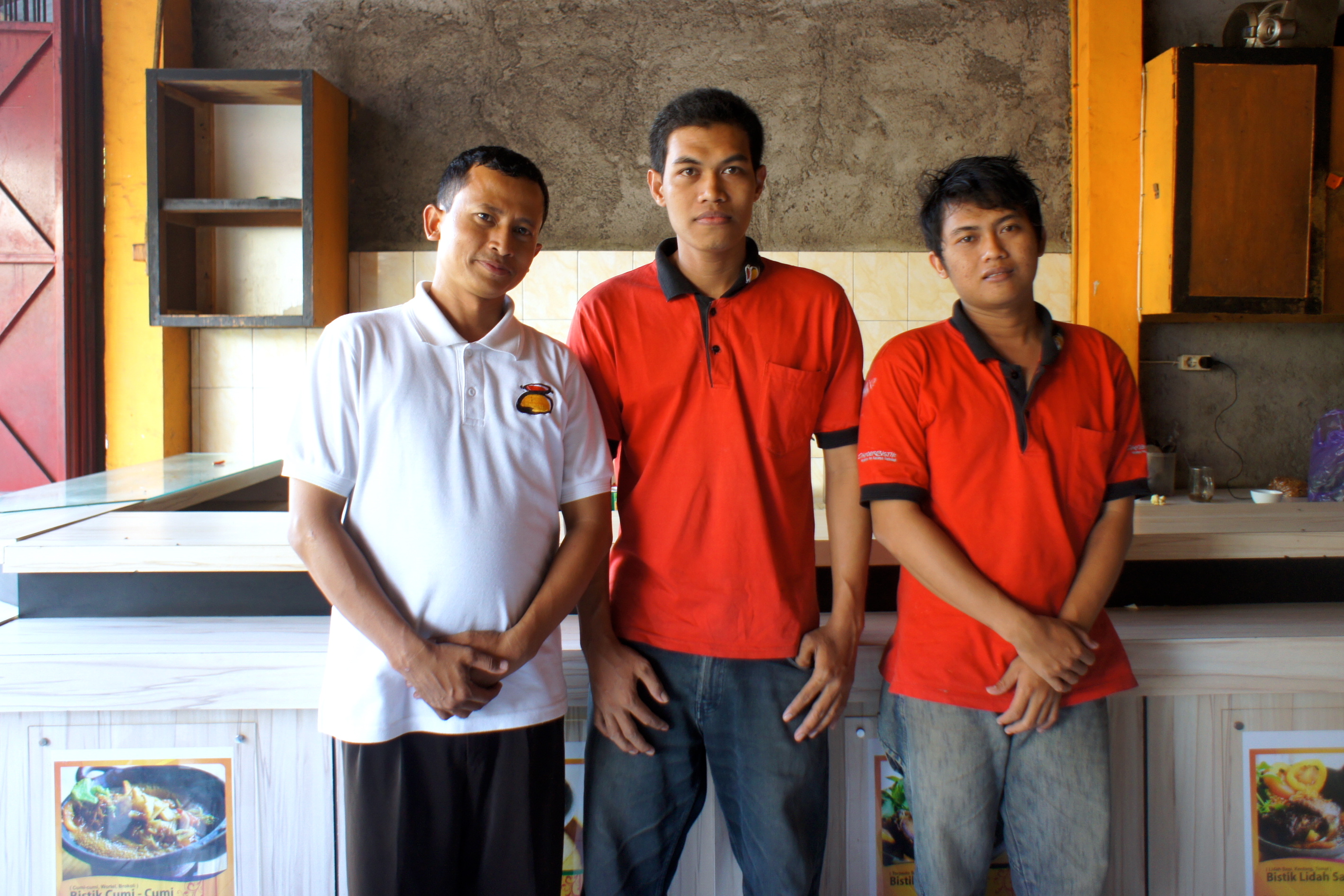
Machmudi Hariono (in white), aka Yusuf Adamira, and two Dapoer Bistik employees, pictured at the restaurant in Semarang, Central Java. The enterprise is run by The Institute for International Peacebuilding to provide former terrorists with a place to work. [Elisabeth Oktofani/Khabar]

Restaurant business provides a new life, an income and a sense of purpose to former terrorist 

For three years, Machmudi Hariono, also known as Yusuf Adirima, 36, has been managing a backstreet restaurant in Semarang, Central Java.

It was no easy feat for this convicted terrorist to put violent activity behind him, land a job and focus on building a clean life.

A former member of the Jemaah Islamiyah (JI) who fought in the Philippines Yusuf, was sentenced to ten years in prison by Semarang District Court in 2004 for possessing and keeping explosive materials, detonators, firearms and ammunitions in a rented house in Semarang.

He spent five and half years in three different prisons, then was paroled for good behaviour.

“When I was in jail, I was thinking, what am I going to do when I am released?” Yusuf told Khabar Southeast Asia at Dapoer Bistik (Steak Kitchen) restaurant, on Jalan Kusumawardhani, Semarang.

“If I want to work as a civil servant, it is not possible because I have been black listed…It would not be easy for me to find a job. It became a problem for me.”

Fortunately, he met Noor Huda Ismail, who gave him not only motivation to start a new life, but also a work opportunity.

Skills first, ideology later

The counter-terrorism expert has devoted much thought to how to wean violent extremists back into civil society. His Institute for International Peacebuilding (Yayasan Prasasti Perdamaian) has a rehabilitation programme that provides skills training and runs businesses – including Dapoer Bistik – where former terrorists can work.

“One of the possibilities that we can do is what I call a social enterprise. Any initiative of peace should be very practical and applicable,” Noor Huda said at a recent panel discussion in Jakarta on terrorism and de-radicalisation in Indonesia.

Civil society efforts are crucial to peace-building and terror prevention, because an approach restricted to law enforcement can feed the problem, he said.

According to data collected by the institute, police have arrested more than 700 terrorists in Indonesia since 2002, weakening militant networks. Meanwhile, 58 terror suspects were killed outright and at least 28 individuals were wrongfully arrested.

“It produced a cycle of vendetta and a narrative that will last for a very long time,” Noor Huda said.

The graduate of Pesantren Al-Mukmin in Ngruki, Solo explained that to disengage militants from violence, one must reach out to them, provide skills training, and then approach their ideology.

“We don’t go to their ideology first because no one like being told [what to believe]. We have to win their trust by visiting them, talking to them and understanding them. But understanding them does not mean supporting them,” he said.

“Once we win their trust, we can provide them skill training such as in cooking and also managing a café. Later, we can approach their ideology. That is what I did with Yusuf,” Noor Huda explained.

From Jihad to Culinary Business

After interviewing Yusuf in prison, Noor Huda visited him regularly, and finally recruited him to the restaurant business. Yusuf found himself falling in love with it.

“At that time, I worked in a duck restaurant. Somehow, I found that I like to cook, serve people and also send delivery food,” Yusuf said. “From there, I realised that I have an interest in cooking and the culinary business, because food is among our daily needs,” he said.

Dapoer Bistik serves Indonesian-style beef steak, chicken, crabs and squid with an affordable price for local people. Located in a culinary centre of Semarang, the restaurant earns Rp 1m-2m ($104-$208) per day.

Yusuf is responsible for managing the restaurant’s finances and hopes to strengthen the brand so they can develop a franchise business.

“Dapoer Bistik has just got a nomination to join a comparative study in Bandung in November, where we would meet prospective buyers who are interested to invest in Dapoer Bistik,” he told Khabar.

Outreach work

When he’s not focusing on the business, Yusuf visits friends: other convicted former terrorists who are in jail in Jakarta, Semarang, Nusa Kambangan or Depok.

While maintaining the ties of friendship, he also talks to them about business alternatives to consider once they are released.

“I do this because I care about them. I don’t want them to have no job when they are released and end up engaged with terrorism activity again,” he explained.

“I would not force them to do the same business as me. If they are interested with other stuff, then they can also do it. At least, they have a source of income,” he added.

Noor Huda has also encouraged Yusuf to recruit drop-out students to work at Dapoer Bistik, to give the daily work a greater sense of social mission.

“Merely being employed is not everything for former terrorists. Therefore, I asked Yusuf to start searching for drop-out students to work at Dapoer Bistik,” he said.

“It provided him a feeling that he was a useful member in the community because he was helping to solve one of Indonesia’s acute social problems, which is unemployment.”

Expanding to Solo

Bistik Iga Bakar, an Indonesian-style rib steak, served at Dapoer Bistik.

Yusuf has successfully brought several convicted terrorists into the business.

They include Hari Setia, who spent four years in jail for providing a shelter for Noordin M Top; Wawan, who helped fund the second Bali bombing by robbing a cell phone shop in Semarang; Ardi, who provided Noordin M Top transportation; and Jack Harun, who was Noordin’s former right-hand man and also a veteran of the Ambon conflict.

“One of Hari’s greatest contributions to Dapoer Bistik is his initiative to register Dapoer Bistik’s products at the health department in Semarang,” Noor Huda said.

“Wawan used to work for Dapoer Bistik for two months cleaning up dishes. He’s now running his own business, providing glass for construction purposes.” he explained.

An unexpected request came from Jack Harun in 2011: to open a Dapoer Bistik in Solo.

“With directions from Yusuf, Jack has chosen an excellent place. It’s in a culinary area and near a mosque where Bashir delivered his sermons and a place where many Islamic activists get together,” he said, referring to jailed Indonesian cleric Abu Bakar Bashir, seen as a spiritual mentor to militants.

Noor Huda explained that running Dapoer Bistik in Solo is much more challenging than Semarang, because it is located in the heart of a radical environment.

“The role of environment plays an important role in disengaging individuals from violent activities. Dapoer Bistik in Solo is still a work in progress. It is far too early to judge the effectiveness of the programme,” he said.

But one positive indicator is that Jack has managed to recruit a former member of Tim Hisbah to Dapoer Bistik in Solo, he said.

Hisbah, an anti-vice group with a history of raiding nightclubs, has recently launched attacks on police, and is believed responsible for suicide attacks in Solo and Cirebon.

“Not such a dangerous person”

Last month, Yusuf reached another landmark in his rehabilitation: he completed his probation on October 10th.

Prior to that date, he was required to report to the East Java Police once a month, making a five-hour trip by motorcycle to Surabaya to sign a piece of paper.

“During my probation period, I was often asked by police to give them information about the terror suspects. I understand that they must still suspect me sometimes,” he said.

“Not just police. My family often checks on me. But I understand and I cannot blame them,” he added.

Yusuf told Khabar he has brought his parents and family to Dapoer Bistik to show them who he is today.

“The most important thing is that I can assure them is that their son is not such a dangerous person anymore. That I have not engaged in any terrorism activity anymore. That is the most important thing,” he explained proudly.

Militant training camp discovered in Poso

Khabar Southeast Asia

Militant training camp discovered in Poso

Officials say the hills and forests of Central Sulawesi – once the scene of horrific sectarian conflict – have become a haven for terrorists

A major security operation under way in Poso, Central Sulawesi has uncovered a suspected terrorist training site on Gunung Biru (Blue Mountain), not far from the place where the dead bodies of two missing policemen were found in early October, multiple media have reported.

Police found weapons, hiding places dug in the ground and the word “jihad” written on a tree at the site, a clearing about two hectares in size in the midst of a thick forest.

Live mines, apparently placed to target security forces, were successfully deactivated, Central Sulawesi Police Chief Dewa Parsana told the Antara News Agency. A 300-strong joint force of police and soldiers is combing the area, hunting for militants and any other explosives that could harm local residents working in a nearby cocoa plantation.

The clearing is about 2km from where two missing policemen were found on October 16th, buried together in a hole, their throats slit. They had been sent to the area to investigate an alleged paramilitary training camp linked to extremist Islamist group Jamaah Ansharut Tauhid (JAT).

Terrorism hotbed

The following day, security forces mounted an aggressive operation in the area which is still unfolding. Major events are summarised here. [LINK TO TIMELINE]

Officials say that militants who once gathered in the hills of Aceh have decamped to Central Sulawesi, a place already scarred by a history of Christian-Muslim violence.

“Since 2010, terrorist groups wanted to make Aceh a militant training base because of the geographical reason. But we have successfully defeated their plan,” National Counterterrorism Agency (BNPT) head Ansyaad Mbai told Khabar Southeast Asia.

“Therefore they looked for a new place, which ended up in Poso. They chose Poso because of its geography and history, since Poso was a conflict area back in 1998 and 2000.”

From the late 1990s to the mid-2000s, Poso was home to sectarian conflict between Muslims and Christians in which 1,000 people were reportedly killed.

Since then, Poso has become a terrorism hotbed, hosting several terrorism cells. The groups are trying to reignite sectarian conflict in the region, Mbai said.

“Their goal is to establish an Islamic state based on their version of Sharia Islam.” Ansyaad said. “If the scenario goes as expected, they would call for a jihad,” he said.

“However, the local communities are aware of what is happening. They are not easily provoked because they have been suffering from previous experiences,” he said. Experts: terrorists trying to use Poso as base

At a recent forum in Jakarta, terrorism expert Solahuddin said that militants are trying to establish a new jihad movement in Poso by uniting smaller cells from all over Indonesia, including those based in Medan and Java.

“They were all united through the military training. They got funded from cyber robbery,” said Solahuddin, a journalist who wrote “From NII to JI: Salafi Jihadism in Indonesia”.

Fugitive terrorist Santoso, thought to be the current leader of the Poso movement, was enflamed after police recently arrested members of the Al-Qaeda Indonesia network, including a man arrested in Palu, Sulawesi.

“That led to the kidnapping of police officers and the bombing of a police post, and they now challenge police officers to an open war,” Solahuddin said.

Caught in the crossfire

The security operation has been costly for local residents. Twenty-two people swept up in a sunrise raid in Kayamanya village and released that evening are taking complaints of heavy-handed police techniques to the National Commission on Human Rights (Komnas Ham), according to reports.

Residents have also protested the deaths of two local people – militant suspects, according to police – shot dead in the course of the raids.

Ansyaad said one of the biggest problems in combating terrorism in Poso is religious sensitivity and misinterpretation of what is happening.

“Often time, the counterterrorism operation tends to be misinterpreted as repressive to religious activities because the terrorist groups always claim their activities as religious activities,” he said. “The terrorist tends to claim that what they are doing is a religious struggle, which is very easily used to provoke society.”

At the same time, local officials and citizens support counterterrorism efforts in Poso because they are tired of the terrorists’ activities.

“Even the local government is worried that terrorist groups’ activities can trigger the sectarian conflict in Poso. And local communities also have been sick and tired with the terrorist groups’ activities. But they are too afraid to report it to the police,” he said. “However, residents have shown their support to the law enforcement officers to combat the growth of terrorism in Poso.”

Security incidents in Poso, Sulawesi: October 8th – November 8th

October 8:

Two policemen sent to investigate reports of a terror training camp last seen alive in Tamenjeka village, Poso Pesisir district, Central Sulawesi.

October 16:

The two are found buried together in a hole with their throats slit, near where they were last seen.

October 17th:

Security forces begin a massive operation to capture the perpetrators, combing the Tamanjeka mountain range, where they believe terrorists are hiding.

October 22:

A church in Madale, Poso is torched. About four hours later, a pair of bombs explode at a traffic police post in Poso City, the regency’s capital.

October 23:

Police detonate a home-made bomb found in Tonipa, Poso.

October 28:

Police find a bomb capable of triggering a “massive” explosion in the yard of a house in Tamanjeka.

October 31:

Anti-terrorism forces arrest five suspected terrorists in Kalora village, Poso Pesisir Utara district. One man, identified as wanted terror suspect Jipo, is killed in the operation.

November 3rd:

Detachment 88 tracks down two more suspected terrorists, identified as MY and K, in Kayamanya village. K is shot dead after he flings explosives at police. MY is arrested. The same day, soldiers discover an apparent militant training camp not far from Tamanjeka.

November 8th:

Police detonate a bomb found behind a home in Landangan, Poso. They say it is similar to explosives found at the militant training site.

Arrests in Java yield new crop of terror suspects

Khabar Southeast Asia

Arrests in Java yield new crop of terror suspects

A police officer assists with an investigation at a house in Palmerah, West Jakarta where Detachment 88 arrested three suspected terrorists on Saturday (October 27th). A total of 11 alleged militants were arrested in four provinces. [Clara Prima/Khabar]

As new terror plots come to light, religious leaders lament how radicalism is undermining Indonesian pluralism and harmony.

Eleven terror suspects arrested by anti-terrorism squad Detachment 88 in Java over the weekend are all new to law enforcement, police said Monday (October 29th).

“We are currently investigating their profile. It appears that their faces are 100% new. They have never been listed in the old networks,” national police spokesman Brigadier General Boy Rafli Amar told reporters in Jakarta.

“Even though their faces are 100% new, we strongly suspect that they have a strong relationship with old networks,” Boy said.

From Friday to Saturday, counterterrorism operations across Java yielded 11 suspects as well as home-made bombs, explosive material, ammunition and bomb-making manuals in four different locations.

At 8 pm Friday (October 26th), Detachment 88 forces arrested two suspected terrorists – Agus Anton and Warso – in Madiun, East Java.

On Saturday, the anti-terror squad picked up three terror suspects in Solo, Central Java – Abu Hanifah, Harun and Budianto. Abu Hanifah is the leader of the Sunni Movement for Indonesian Society (Harakah Sunni untuk Masyarakat Indonesia or HASMI).

The same day, anti-terror forces arrested three suspects in Bogor, West Java –Emir, Zainudin and Usman – and three more in Palmerah, West Jakarta: Azhar, Herman and Sunarto.

Group had ambitious plans for violence

All the detained men allegedly belonged to a network that was targeting US diplomatic missions and a Jakarta building that houses the offices of mining giant Freeport-McMoRan, according to police.

“This group targeted the US consulate in Surabaya, the US embassy in Jakarta, Plaza 89 in Jakarta, which is located in front of the Australian embassy and the office of Freeport, and also Mobile Police Brigade in Central Java,” national police spokesman Suhardi Alius told reporters in a press conference Saturday.

Boy added that based on current analysis of seized documents; the group wanted to attack foreigners because of the “Innocence of Muslims” film. “Other than that, the group also wants to attack the law enforcement officers,” he added.

Information leading to arrests was obtained from investigations of previous cases, tips from regular people and the use of technology to monitor activities, he said.

Religious leader: economy, misunderstandings of Islam sow militancy

Hearing of the arrests, Mustofa Bisri, a religious leader from Central Java, said the emergence of a new terror outfit was likely rooted in economic factors and mistaken religious convictions.

He urged the government to address economic disparities that can set the stage for young people to be led astray. Meanwhile, he said, religious leaders must set people straight about the true meaning of jihad.

“The government must be sensitive to immediately find solutions to radicalisation and terrorist movements in this country,” said the leader, affectionately known to his followers as Gus Mus. He spoke after attending a ceremony in remembrance of the late president Abdurrahman Wahid in Jombang East Java, on Sunday (October 28th).

Police raids alone will not extinguish terrorism, he cautioned: the root causes of radicalism must be addressed. Those efforts must be redoubled, because the movement keeps popping up and spawning new terrorists who are young people, he said.

“It’s very unfortunate that such movements continue to emerge and haunt the security of this nation,” Gus Mus said. “This country, which has embraced the ideology of pluralism, must maintain peace. Indonesia is a big country with the potential to show harmony to the world.”

“There will be no beauty in this country if violence and arrogant actions are called up to address every kind of problem,” echoed Salahuddin Wahid, the former president’s brother. HASMI group denies connection

Meanwhile, a Bogor based Islamic mass organisation named HASMI visited the National Police headquarters in Jakarta to deny any links with the suspected terrorists.

According to a press release published on their official website, the organisation has nothing to do with the HASMI terrorist group, but focuses on formal education and peaceful preaching.

Police spokesman Boy indicated it may be a case of the same name being used by two different groups – one a legitimate organisation, and the other a network of extremist militants.

“We strongly assume that HASMI (terrorist group) is different with Bogor based HASMI. We do not want to get stuck on the name of an organisation, but on what they are doing, what their plans are,” Boy said.