Priceless Loyalty To the Sultan

The Jakarta Globe


Priceless Loyalty to the Sultan

Elisabeth Oktofani & Florencia Margaretha Taruli Toruan

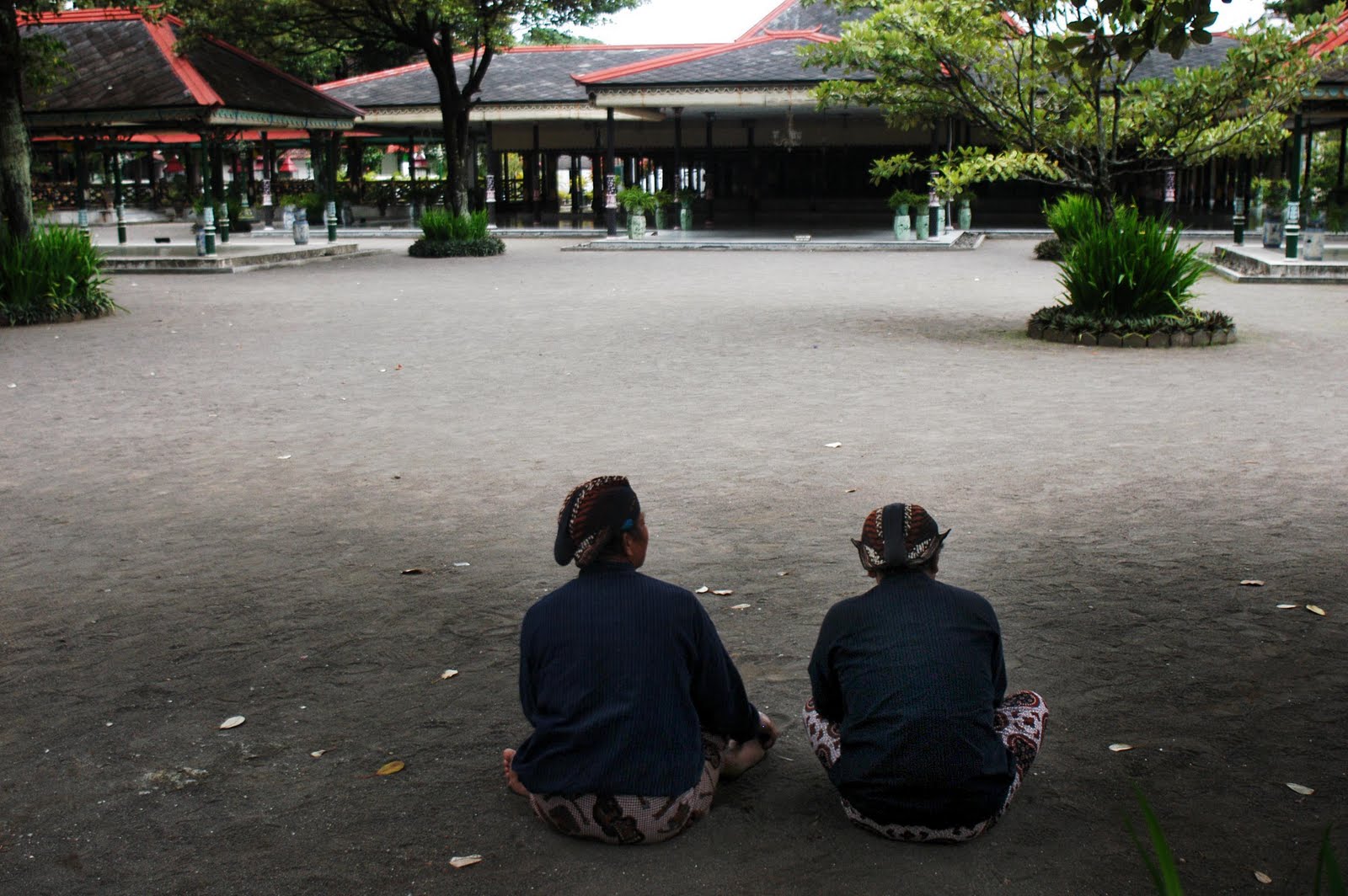
Yogyakarta Palace is a symbol of Javanese culture. It is also the home of Sri Sultan Hamengkubuwono X and his family.

About 3,000 abdi dalem — which loosely translates as royal servants — serve the sultan and his extended family. In return, they receive a minimal monthly salary ranging from Rp 8,000 to Rp 62,500 (90 cents to $7).

But for these royal servants, their work is not about money, but about upholding and honoring ancient Javanese traditions.

The royal guards, who are among the abdi dalem, dedicate their time to Ngarso Dalem, a term they use to refer to the Yogyakarta sultan.

Aji Triman, 43, who is dressed in kain pranakan — a dark blue fabric with a pattern of three vertical lines typically worn by the royal guards — said he was inspired to become an abdi dalem after having recurring dreams.

“One night, I dreamed about GKR Hemas,” Aji said, referring to the current sultaness of Yogyakarta. “In my dream, I helped her catch a very big fish in the pond.

“After I gave her the fish, she said, ‘Would you like to help me find one more fish?’ I said yes and left to find another fish. But when I left, I suddenly woke up. The dream was a sign for me to dedicate myself to the sultan’s palace and his family.”

Bekel Djoko Tjermo, 57, has been working as an abdi dalem since 1985 and believes that his path in life has nothing to do with how much money he earns.

“I can feel the blessing from Ngarso Dalem, which makes my life easier,” Djoko said. “That is what I earn, actually.

“Every month, I get paid Rp 8,000 by the sultanate. I work twice a week, in two three-hour shifts,” he said.

Along with his Rp 8,000, Djoko added that the money he earned from his small business and from presiding over traditional Javanese weddings was sufficient to cover his family’s needs.

“In fact, it is a lot. I can send my children to university, I own a house and I can also feed my family three times a day.”

Ngabehi Margowikarto, 78, has been registered as an abdi dalem since 1990, when he retired as a civil servant for the railway company.

Margowikarto, who is also known as Djumakir, said he enjoyed his duties as an abdi dalem more that his previous job with the railway company.

“Actually, I cannot really sit still at home and do nothing. I want to dedicate myself to Ngarso Dalem, find new activities to do and make new friends,” said Djumakir, adding that one of his favorite duties is to help tourists who visit the palace.

Gusti Bendoro Pangeran Haryo Joyokusumo, who is in charge of paying the abdi dalem, said the Yogyakarta Sultanate is currently working on a new salary scheme for the servants.

“The salary of the abdi dalem actually cannot really be called a salary, but rather it is an ucah dalem [the term for salary or stipend in the palace] because it does not reach the regional minimum wage rate for Yogyakarta, which is Rp 745,694 per month,” Joyokusumo said.

“Some abdi dalem, do not spend the ucah dalem from the sultan’s palace, but keep it as a talisman for luck.”

Joyokusumo explained that under the new structure of ucah dalem, the sultanate is planning to hand out allowances based on each abdi dalem’s duties and length of service, which will affect how much they received for transportation, for their families, as well as for their daily fees.

But in order to implement the new system, the sultanate has to determine the rank of each of the 3,000 abdi dalem.

“The only problem that we have right now is that we need to register all the abdi dalem electronically. [Currently], the manual registration logbook is still being used,” Joyokusumo said.

“Once we have them computerized, we can give them the new ucah dalem based on their individual professional levels. As guardians of Javanese tradition, the abdi dalem receive a quality education in Javanese culture,” he added.

Joyokusumo said the sultanate recruited new abdi dalem twice a year and all Indonesians could apply, as long as they were willing to learn, understand and implement Javanese culture and tradition.

“We have two grades of education for abdi dalem. First grade is an introduction of general knowledge about the Yogyakarta Sultanate and Javanese tradition, while the second grade concerns leadership,” he said.

According to Joyokusumo, each grade consists of eight training sessions and the abdi dalem receive career advancement as well as additional ucah dalem after successfully passing each level.

However, it can be difficult to sell a job that pays Rp 8,000 month, especially to young people.

Heirwid Benny Sulistriono, 23, a student at Gadjah Mada University, said that while he would like to be an abdi dalem, the low salary was an issue.

“To be realistic, how can you live on less than $10 a month? Let me say that I have priorities in my life,” he said.

“My priority at the moment is once I graduate, I want to get an enjoyable job that provides a good salary, enough for meals, to have a house to live in and also to enjoy myself,” Heirwid said.

“This doesn’t mean that I wouldn’t want to be an abdi dalem if I was asked to be one. I could be an abdi dalem if the work hours were flexible. Perhaps, if I only had to work on the weekends, then I would not be bothered by the low salary.”

Febrianto Valentinus Situmeang, 22, a recent graduate from Atma Jaya University in Yogyakarta, said he had lived and studied in Yogyakarta for the last four years, and had absolutely no interest in becoming an abdi dalem.

“Yogyakarta has a special character due to it being a cultural center. But I am Batak, not Javanese,” he said.

“Even if I were Javanese, I don’t think that I would want to be an abdi dalem because it requires a high level of personal dedication.”

Joyokusumo is not worried, however, that the palace will run out of willing abdi dalem anytime soon. He said there was no lack of applications from young people who wanted to preserve Javanese tradition by becoming abdi dalem despite the low remuneration.

“It might appear that most of the abdi dalem are old,” he said. “But fortunately, every time we open recruitment, we always have young applicants between the ages of 24 and 30.”
Nation’s Gay, Transgender Community Searches for a Voice in the Mass Media

The Jakarta Globe


Yogyakarta. The media wield enormous influence in informing public opinion, and in Indonesia this power has often been used to discriminate against marginalized social groups such as the lesbian, gay, bisexual and transgender community.


Homosexuality is often portrayed in local media as a sexual aberration or deviant behavior. These and similar other labels are used to denounce the LGBT community through the media, both directly and indirectly.

“When was the last time you read a news report about a crime committed by a heterosexual person, in which the headline made reference to their sexual orientation, like ‘Heterosexual man kills girlfriend,’ for instance?” said Mira, an activist with the Yogyakarta-based LGBT group People Like Us One Heart.

“So why is it the media insist on trumpeting the suspect’s sexual preference if they are homosexual, as in the case of Ryan, the serial killer from Jombang [East Java]? And another thing: why don’t media report on the achievements of LGBT individuals?”

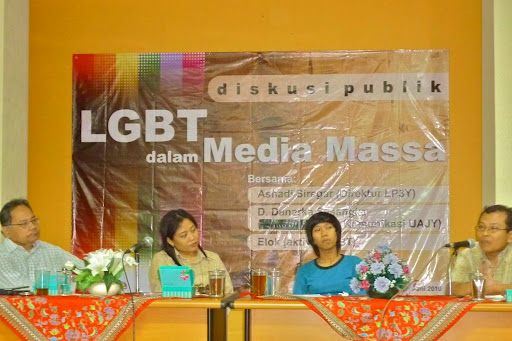
Mira was speaking at the LGBT in the Mass Media forum on Tuesday, held by PLU One Heart and Yogyakarta-based Atma Jaya University’s School of Political and Social Sciences.

The skewed reporting can be traced to journalists’ lack of formal training on the topics of sexuality and gender studies, said Ashadi Siregar, the executive director of the Yogyakarta Research, Education and Publishing Institute.

“Media workers are not trained to understand LGBT issues correctly,” he said. “Their reference paradigm is one that has been molded by prevailing religious and cultural values, so what they need is more education on this topic.”

Atma Jaya journalism lecturer D Danarka Sasangka blamed the poor standard of LGBT news coverage on the fact that the media were catering to viewer tastes in a largely conservative country.

“The media cannot be separated from business and political interests,” he said. “Their level of objectivity in terms of homosexuality should therefore be seen from the point of view of industry.”

Danarka cited the reality-based television show “Be a man,” in which male transvestite contestants undergo a series of tasks ostensibly designed to make them renounce their lifestyle choice.

“Unfortunately, there are many transgender people who want to take part in the show,” he said. “It paints an often very negative picture of the transgender community. This is how the mass media shape our reality.”

Ashadi said there were steps the LGBT community could take to rectify the situation.

“They can help end the stigma in two ways,” he said. “First, by establishing a media-monitoring institute to combat the negative stereotypes, and second, by developing alternative media for advocacy purposes, which will help the LGBT community raise public awareness about the issues it faces.”

My Jakarta: Sri Asih, Entrepreneur and Grandmother

The Jakarta Globe

My Jakarta: Sri Asih, Entrepreneur and Grandmother

When Sri Asih isn’t celebrating the birthday of one of her 14 grandchildren with her husband, Mohammad Mupriyanto, she’s flexing her entrepreneurial muscles. Asih, 60, who moved from Sragen, Central Java, to Jakarta in 1968, has done everything from making gado-gado (salad with peanut sauce) and mopping floors to sewing buttons and serving food. Today, she explains how one of her businesses, Badut Mupri, has been bringing joy to the kids of Jakarta for 35 years, why being a clown sure beats being a criminal and how, if you can turn a frown upside down, she’s hiring.

Why did you come to Jakarta?

Most of my friends’ parents were asking them to get married at a young age. That was my worst nightmare because I wasn’t ready to get married at that stage. So I decided to leave Sragen to seek a better future in Jakarta.

How did you meet your husband?

It was one week before Idul Fitri in 1969. He had been coming to the warung [food stall] I worked at for some time and one day we had a conversation. We were both alone in Jakarta so we decided to live together and get married.

And what do the two of you do now?

My husband and I run an entertainment business, Badut Mupri [Mupri the Clown]. Actually, we started by selling handmade cardboard masks at an art bazaar in Ancol in 1975. My husband wore a mask while I stood next to him selling similar masks. He didn’t do anything funny, he just wore the mask, but people laughed anyway. It was obvious that people were hungry for entertainment. So that same day we decided to start our own entertainment business.

What was the first day of business like for Badut Mupri?

We earned Rp 70,000 in three days. And that was in 1975.

What role do you play in the business?

I’m the wife of Badut Mupri, a maker of clown costumes and also the owner of the business. I do whatever the business requires, be it acting, sewing or booking parties.

How do you promote your business?

We never really went out and advertised until my youngest son, Eko, helped us make a brochure and created a Web site for us [http://badut-mupri.com/]. But basically, the business operates by word of mouth.

Why clowns?

Clowning is a great form of entertainment. It makes people happy and puts smiles on kids’ faces. But it makes me sad when I see people dressed up like clowns just to beg for money on the street. I mean, it’s better than going out and robbing people, but it can ruin the image of clowns for kids.

Have you ever painted your face and worked alongside your husband?

Yes! One day in 1978, we had overbooked and we didn’t have enough performers to fulfill all the bookings, so I had to dress up. If I’m not mistaken, we had 19 performances scheduled for 19 different places that day. So I had to go and work at a birthday party hosted by Gen. Tjokropranolo [a former governor of Jakarta]. I went there as a duck.

How did it feel performing for everyone?

It was very strange and everybody was laughing and making fun of me. They grabbed my tail and pulled me here and there. But then again, nobody could see that it was a grown woman in the suit.

How does it feel being the wife of a clown?

Wonderful. I’m proud of it! Not only has my husband made work for himself, but he has also created jobs for others. Many people mocked my husband when he said he wanted to be a clown. They said he was crazy, but which is worse, being a clown or a criminal?

Do you have any dreams you haven’t fulfilled?

I want to build a park or a playground for children so they can expand their imaginations. I want it to be a place where kids can play and have fun, but also a place to learn.

Do you ever think about retiring?

As long as we are still able to work, we have no plans to stop making kids smile. But I expect that one of my children will take over so that the business, which started from zero, doesn’t just disappear when we retire.

Where do you find your clowns and acrobats?

We welcome anyone who is willing to work and never says I can’t do this or that, because people can accomplish anything as long as they have the will to do so. We have a place for them to stay and we have jobs for them.

Sri Asih was talking to Elisabeth Oktofani.

Tune Your Radios to a Greener Jakarta

The Jakarta Globe

For those stuck twirling the dial during smoggy commutes, Green Radio is a breath of fresh air for those who like their news mixed with a daily dose of environmental responsibility.


Broadcasting on 89.2-FM, Green Radio is the only news station in Jakarta whose main focus is educating listeners about the big and small changes they can make to benefit the environment.

“Green Radio was inspired by the floods in 2007 that left more than 70 percent of the Jakarta area drowned,” said Santosa, the station’s managing director. “There must be something wrong with the environment, so one day I came up with an idea to change our previous station, Radio Utan Kayu, which focused on more general issues, to Green Radio.”

The station’s tag line is “The eco-lifestyle of Jakarta,” and Santosa said more than 200,000 people tune in daily across Greater Jakarta to listen to news, environmental reports and discussions.

And the small station’s influence extends beyond the reach of its radio transmitters. Besides broadcasting a message urging environmental consciousness, Green Radio has also spearheaded programs aimed at getting their audience actively involved. “Green Radio has on-air activities and also off-air activities because we want to encourage the public, through our listeners, to get involved to save the planet and help to avoid floods in Jakarta such as the 2007 flood,” Santosa said.

And it isn’t all just talk. From day one, Green Radio has used solar panels to power its 18-hour broadcast day.

“I decided to use solar panels because they are very environmentally friendly and use an unlimited natural resource: the sun,” Santosa said.

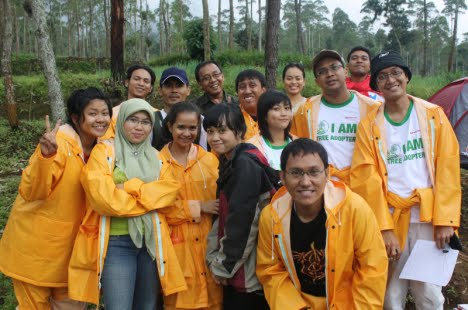
So far, Green Radio has organized three initiatives: the Friends of the Forest tree adoption campaign at Gunung Gede Pangrango National Park, a clean-up of the area around Monas in June and a biopore creation workshop. Biopores are small holes drilled in the ground to decrease flooding.

Green Radio collaborates with private sector and government organizations as well as members of its audience, Santosa said, adding that the station has had more than 2000 individual participants take part in its greening programs.

Through its Friends of the Forest adoption program, individuals and organizations donate Rp 108,000 ($12) to have a tree planted in a deforested area in Gunung Gede Pangrango National Park in West Java. Green Radio has collected enough money to plant 7,031 trees in a 10-hectare area over the last 18 months, decreasing soil erosion at the farms that line the park’s borders.

“We’ve already got 15 big organizations and 300 individual adopters,” Santosa said. The program was created in partnership with the park and Conservation International Indonesia.

He added that the program was also helping reclaim parts of the forest from local farmers who use the park to plant crops, and trains those farmers for new careers in eco-tourism. At a cost of Rp 290,000 per person for two days and one night, the tour provides lodgings in a campground or tree house, five meals, guides, porters and the planting of a tree.

“The income goes to local farmers who help us organize the eco-tours. They prepare the food and act as forest guides and porters.” Santosa said, adding that some farmers were also given goats, rabbits and honeybees to breed.

In addition to Friends of the Forest, Green Radio has also developed a biopore program, active since July 2009.

“The biopore program is a regular training program that teaches people how to make small holes [in the ground] for water absorption. They can absorb more water in the rainy season and also can be used to produce compost.” Santosa said.

Each biopore is designed with a 10-centimeter opening and with a depth of one meter.

Through partnership with the Body Shop retail chain and Mall Ciputra, Green Radio’s program has been responsible for the creation of 1,500 biopores across Jakarta.

“We are working together with these caring communities to help reach the government’s goal of creating one million biopores,” Santosa said. “Hopefully, these biopores will help us to avoid another big flood like the Jakarta flood in 2007.”

History Buffs Go in Search of Indonesia’s Past

The Jakarta Globe


One only has to look at the demolition of colonial-era buildings across the country to see that heritage and history here are undervalued.


Sahabat Museum (Friends of the Museum) is a community of Indonesians who want to change that attitude, especially in young people.

From monuments, museums and temples, the group has introduced and dissected the country’s past for its thousands of members.

Ade “Adep” Hardika Purnama, 33, founded the community with a simple mailing list on Yahoo Groups in 2002.

“Since then, the online forum has attracted more than 4,600 members. We use it to share everything, from stories about our national heroes to our tour itineraries,” Ade said.

The group’s first trip, in 2003, was to Merdeka Square and Istiqlal Mosque in Central Jakarta. As many as 400 members took part in it.

Lala Amiroedin, 33, recalled that first outing seven years ago. “Back then, I had just returned from studying in the States and wanted to know more about Jakarta. My friend told me about this group and I thought it was really cool,” she said.

To date, the group has arranged 77 excursions. Participants range in age from young children to the elderly — even Adep’s 65-year-old mother, Wisdawati Amran, has taken part.

Adep said his mother used to take him on frequent trips to historic sites, such as those in the Old Town area of Jakarta, and he hopes parents today do the same for their children.

Sahabat Museum has also arranged visits to Cirebon, where a West Javanese kingdom once reigned, and Ambarawa, Central Java, which saw a battle between Indonesian and British forces in 1945 during the struggle for independence.

The group has also visited sites outside Java, such as Padang in West Sumatra and Banda Neira in Maluku, where the country’s founding fathers lived in exile during the Dutch occupation.

Sahabat Museum also invites guest speakers to give presentations about different historic sites. One such speaker is Lilie Suratminto, a history professor at the University of Indonesia.

“I always say that a nation that does not know its own history is an ignorant nation,” Lilie said. “So I am impressed to see that there are still a lot of people who are interested in learning about the country’s history and visiting museums.”

Outings are arranged by volunteers from the group and usually cost between Rp 35,000 ($4) and Rp 75,000 for trips in Jakarta, and from Rp 2 million to Rp 5 million for trips outside Java, covering everything from plane tickets, meals and accommodation.

Upcoming Tours

May 13-16 Malang, Blitar and Kediri in East Java; Rp 2 million-Rp 3 million.
May 28-30 Bengkulu, where former President Sukarno lived in exile; Rp 2 million-Rp 3 million
October 25-31 Ternate, Tidore, Halmahera and Morotai islands in Maluku; Rp 6 million
Sahabat Museum
sahabatmuseum@yahoogroups.com

Reaching for the Stars With Down Syndrome

The Jakarta Globe


Stephanie Handoyo, swimmer


Stephanie Handoyo may have Down syndrome, but that hasn’t kept the vigorous 18-year old from achieving goals other people only dream of.


Not only has Stephanie won various swimming championships, she’s also listed in the Indonesian Museum of Records as having played 23 songs in a row on the piano during a showcase in Semarang, Central Java.


Her mother, Maria Yustina, could not be prouder. On the day she found out she was going to give birth to a baby with Down syndrome, Maria bought a book about the condition to prepare for the special challenges she would face as parent. Then when Stephanie was just 3 years old, she began helping her to be independent.


“Some parents just don’t want to invest their time teaching and communicating with their children, who each have special needs that require patience and time to understand,” Maria said. This often leads parents to feel the need to “hide” their children, she said.


“From the day they are born until they are 6 years old, that’s the golden age, and you have to completely focus on them.”


By the time Stephanie was 3, she was already learning how to swim, something that Maria knew would benefit her daughter’s motor skills and contribute to muscle development. And when she turned 9, Stephanie began taking private piano lessons.


These days, Stephanie trains three times a week, for two hours at a time at the pool. And when she’s preparing for a competition she’s in the water for up to four hours at a time. .


“She’s won every swimming competition she’s competed in. Or at least gotten second or third place” Maria said.


But there have been setbacks, too. “Once, during a swimming competition she almost drowned in the pool,” Maria said. “That traumatized her and she didn’t swim for three years after that.”


To get Stephanie back into the pool Maria had to get in the water with her daughter and carry her in her arms to the middle of the pool. It was Maria’s way of showing her daughter that she would always be there to keep her safe.


Stephanie is now training to qualify for the 2011 Special Olympics World Summer Games in Athens.


“The government has also been very helpful in assisting parents of children with Down syndrome, especially those with accomplishments such as Stephanie’s,” Maria said.


Michael Rosihan Yacub, golfer


Aryanti Rosihan Yacub always knew her son Michael would be a success. So despite the long looks and stares of strangers, Aryanti never stopped encouraging him.


“I never cared about all the negative things that people say about children with Down syndrome,” Aryanti said. “I’ve always believed that if a child receives support, they can be as successful as normal people.”


Her patience and fortitude has inspired her son to break down barriers and fight off discrimination. In late 2009, the Indonesian Museum of Records (MURI) recognized the 20-year-old Michael as the only registered golfer in Asia living with Down syndrome.


Michael’s parents knew they were onto something when in 2006 he competed in a charity golf event in Singapore and finished fifth among 140 entrants.


“Most people underestimated him in the beginning, but Michael proved that they were wrong,” Aryanti said.


But Michael’s success didn’t happen overnight. Michael’s journey began when he was just 2 years old. Raised in a house of golf enthusiasts, Michael took to golf like a duck to water.


“It was when he was 8 when I decided to find a coach for him,” Aryanti said. Since then Michael has practiced swinging his clubs at least two times a week.


Aryanti said golf was instrumental in helping Michael improve his focus and discipline, while also providing him with a form of exercise.


“Golf is a game of concentration. It requires the player to focus real hard,” she said. “It’s a perfect sport for children with Down syndrome.”


During the MURI ceremony, Michael competed in an 18-hole tournament with other members of his golf club in Pondok Indah, South Jakarta. Although he didn’t win he shot an inspiring 108.


“He impressed everyone,” Aryanti said.


Aryanti said she always saw Michael’s condition as a blessing and not a curse.


“Children with Down syndrome are not trash in the society; instead they’re gifts from God. ”


The next step, Aryanti said, is to guide Michael toward a completely independent life.


“I know Michael’s IQ is only 35, but that doesn’t mean he can’t be independent,” she said. “With a lot of support from the family he can run his life like a normal person.”


Juliwati Jati, athlete and dancer


Juliwati Jati rarely misses a Special Olympics practice. And if she does it’s for good reason. The 17-year-old, currently a student at Dian Grahita School for Children with Special Needs in Central Jakarta, has a lot going on.


Juli, originally from Sampit district, East Kalimantan, has impressed her coaches and teachers with her passion and spirit.


The two-time Special Olympics medal winner is also a talented dancer.


Harison Sirait, the sports teacher at Dian Grahita, said Juli was someone her teammates could look up.


“At the last Special Olympic in Canberra, Australia, in 2008, Juli competed in two events and she won a silver medal for an individual basketball competition and a gold medal for running competition,” he said.


Harrison, who has coached Juli since 2000, said that Juli’s attitude and work ethic were what won her the hearts and minds of her peers.


Juli, who left her parents when she was just 2 years old to live in Jakarta with her aunt, has traveled to Canberra, Shanghai and Singapore to compete in Special Olympics events.


Under the guidance and support of her aunt in Jakarta, Juli juggles school, practice and dance competitions.


Along with seven other classmates, Juli competes in competitions as part of the SLB C Dian Grahita Jakarta dance group.


Agus Sucipto, Juli’s dance instructor, said that as long as the music was cheerful the energetic students took to the rhythm and dance with enthusiasm.


“For us, it’s not about being named the winner of the dance competition. It is about competing,” said Suster Joanni, the principal of Dian Grahita.


“Their hard work and their willingness are more than enough to be a winner for themselves.”

Indonesian Women in Their Own Words

The Jakarta Globe


Lisa Siregar, Sylviana Hamdani & Elisabeth Oktofani


What issues are women most concerned about in Indonesia? What are their aspirations, hopes and dreams? How do they view gender issues? To commemorate International Women’s Day today, the Jakarta Globe interviewed eight women to find out what they had to say about these issues.

Sofia Kartika, gender and development studies observer

Sofia Kartika, 27, is a blogger and avid observer of gender and development studies. She thinks that there are two issues that most concern women in the country.

“The first is the Cedaw as the entry point for policy,” she said, referring to the Convention on the Elimination of All Forms of Discrimination against Women. Under the 1984 convention, government policies should not discriminate against women.

“It has almost been 25 years since we ratified the Cedaw, but it has yet to work properly,” Sofia said.

She cited the Antipornography Law and at least 156 bylaws in the country that she said discriminated against women.

However, Sofia, who also freelances at the Cedaw Working Group Initiative, also acknowledged that some policies protected women against violence and trafficking. “But enforcement of the law is yet to be optimized,” she said.

Another gender issue that Sofia thinks is important concerns the Millennium Development Goals. “This is an entry point to reduce the gap in terms of access, participation, control and advantage between women and men,” she said.

The MDGs seek a reduction in female illiteracy rates and the number of women dying during childbirth, as well as to empower women politically. But there is still a lot to be done. “Women’s issues have not been well-coordinated between the government, civil society and the private sector because policy makers do not have a complete understanding of women’s and gender issues,” Sofia said.

Dinda Alvita, model

Aside from being a model, Dinda Alvita, 24, is also a law student at the University of Indonesia.

She readily admits that in the fashion industry, it is the physical that matters most. “The pressure, in terms of being physically attractive, is huge,” she said. “Even though you exert your best effort, if they don’t think you fit the physical requirement, you won’t make it.”

Quoting famous French fashion designer Coco Chanel, Dinda said that one has to be unique to be irreplaceable. For models, that means that one has to be extremely beautiful or extremely ugly so that people will take notice.

Dinda said she was usually booked for runway shows rather than magazine shoots. Whether on the runway or in real life, Dinda thinks women in general will always be judged based on how they look.

“For example, men can be so picky in terms of looks when looking for partners,” she said. Women, on the other hand, prefer security over looks.

Looks aside, Dinda said that women faced challenges in the public and private spheres of their lives.

“My family expects me to look for a boyfriend, get married and start a family soon, but I’m not ready for that,” she said. “Is [doing so] really important? Because I can do things on my own.”

Nitta Nazyra C Noer, filmmaker

Young filmmaker Nitta Nazyra C Noer is in Aceh filming the documentary “Srikandi Pulang Kampung” (“Srikandi Returns Home”), which follows the story of a Jakarta transvestite who returns to his hometown.

“Srikandi” is sponsored by Kalyana Shira Film, a production house known for producing films that tackle gender issues.

Nazyra said that not all women in the country were empowered, adding that patriarchy had grown stronger in Aceh.

“What’s worse, women in Aceh don’t think that they are repressed because they think the [Shariah] law is right,” Nazyra said.

In her film, Nazyra’s goal is to capture how poverty affects the lives of the Acehnese, particularly from the transvestite characters’s point of view.

“For me, poverty is not only [limited to] material things or money, but it also [includes poverty of] information,” Nazyra said. “I see that women in Aceh are going backward with bylaws that are non-gender sensitive.”

Nazyra pointed out that during Prophet Muhammad’s time, women were still accorded respect even though they were placed second to men.

The filmmaker, however, said she was optimistic about women’s empowerment in the capital.

“In Jakarta, we see a lot of smart and ambitious women who are independent,” she said.

“But I don’t like it when men give women the advantage just because they’re women. If that happened to me, I’d be offended.”

Mila Melany, housewife

Mila Melany is a homemaker who lives in Tangerang. As a mom to a 5-year-old daughter, she is very concerned about child trafficking, an issue that she often reads about in the newspapers.

“I’m worried about my only daughter,” she said. “I read in the newspapers that schoolchildren are often lured with chocolate and candies by strangers and then kidnapped.”

To prevent this from happening, she has taught her daughter not to trust or accept gifts from strangers.

Mila is also wary about news reports concerning the Internet.

“Parents should really monitor their children’s online activities,” she said. “Teach them to say ‘no’ when a new friend from Friendster or Facebook asks to meet in person. It could be very dangerous for them.

“The police should also get to the root of this problem and uncover the syndicates [involved],” she said. “It would certainly make our lives easier.”

Roslina Verauli, psychologist

Roslina Verauli works as a psychologist at Pondok Indah Hospital. She has long observed that women are very susceptible to different kinds of stress.

“This is caused by the multiple roles they have in their lives,” she said.

“She is often a wife, a mother, as well as a career woman. These differing roles cause her tremendous pressure, which may lead to mental stresses.”

Roslina is of the opinion that the country should start doing more to develop family systems.

“Right now, parenting is still perceived as a mother’s responsibility,” she said. “When something goes wrong with the children, the woman is always blamed. This is not fair.

“Husbands should share the responsibility with their wives. When a wife is not too tired and is not under a lot of pressure, they’ll have a happier and healthier home life.”

Mien Uno, entrepreneur

Mien Uno, president director of Duta Bangsa College, thinks that women are still discriminated against in this country.

“Indonesian culture still puts an emphasis on the men,” she said. “As a result, men receive better treatment within their families and at workplaces.”

Mien thinks that women themselves perpetuate this cultural problem.

“We will be treated fairly if we’re qualified,” she said. “Do not succumb to gender inequality. Learn new skills. Expand your horizons.”

She believes that if women empower themselves, they will eventually be able to improve their roles in society.

“Personally, I think women are naturally built to be stronger than men,” she said.

“We can do more things and take on more responsibilities. I believe that if women foster their characters and continue to learn, people will respect and trust them more.”

Riri Kristiana, security guard

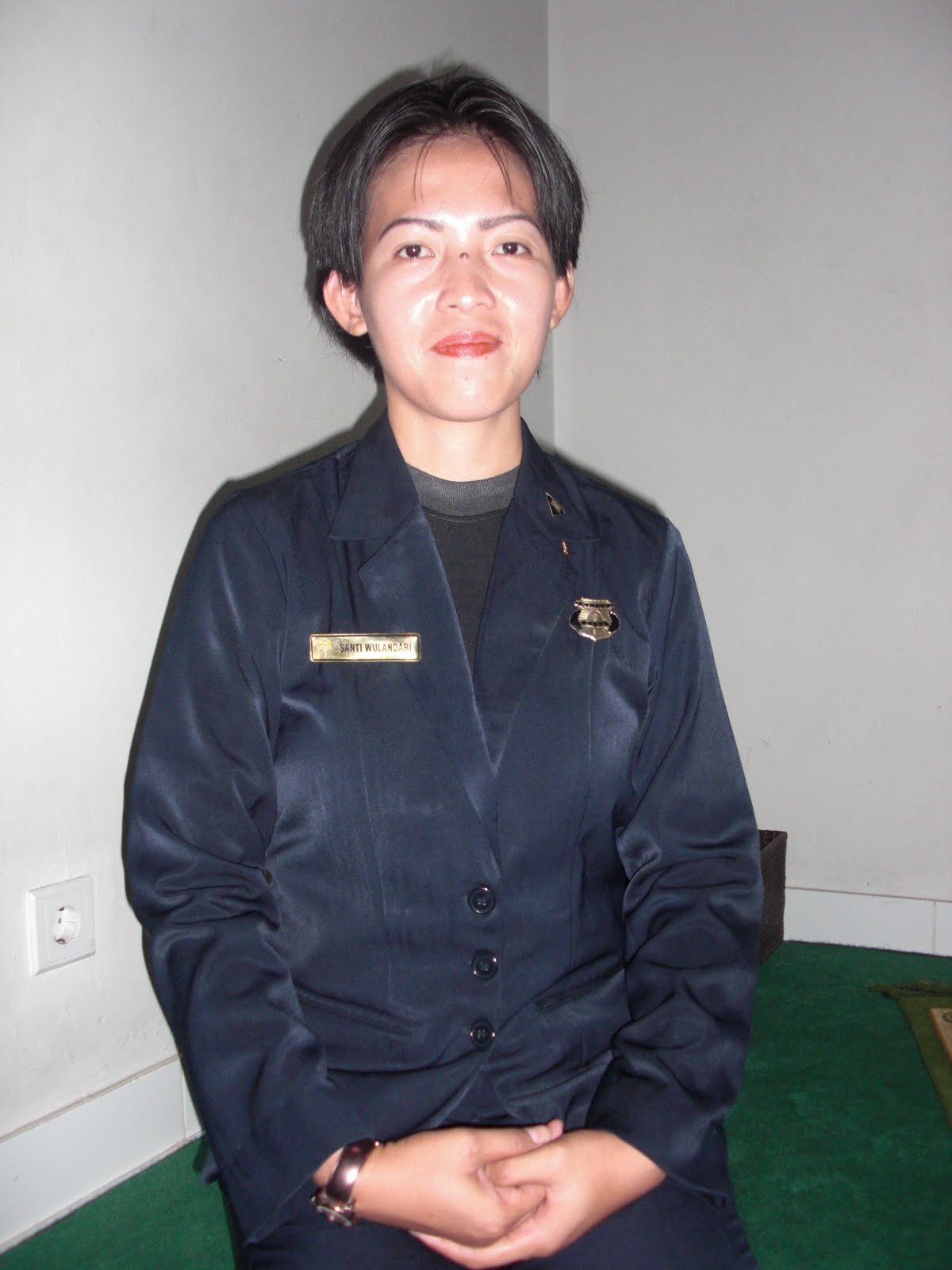
Riri Kristiana, 34, works as a security guard at an apartment complex in the capital. She has two sons, aged 7 and 12. Her not-so-traditional occupation was the result of a decision she made five years ago to support her family.

“I have had experiences with other types of work in the past. But because I love to try new things, I took this job as a security officer, which has been very challenging,” Riri said.

She said that most of the male security officers she works with do not underestimate women who hold the same job. In fact, they respect women who are brave enough to work in the field.

“The only problem that I encounter is complaints from both apartment guests or the management. It’s not a big deal, though.

“There are some guests who do not want to be checked and they complain about us and what we do. People in management complain about finding parking spaces,” she said.

While Riri still enjoys her current job, she is considering making a change to a career that would allow her to spend more time at home with her children. She is finding this a challenge, however, because of her age.

“Life is hard and I am willing to take whatever job I am given. As a woman, I think I can do whatever men can do,” she said.

Caroline, DJ

Being a female DJ and a lesbian is a complicated combination for Caroline (not her real name), a 20-year-old university student from Yogyakarta.

“We live in a society that has many stereotypes based on gender,” she said. “In addition, there is still a lot of ignorance about homosexuality.”

Caroline, who started her career as a DJ working at nightclubs while she was still in junior high school, said that it was not difficult to maintain a positive image, as long she avoided the temptations of alcohol and drugs.

“It’s a piece of cake to create a positive image as a female DJ. But as a lesbian, I always try to hide my identity from everyone except from my good friends. I don’t want people to start discriminating against me because my of my sexual orientation,” she said.

A Second Shot at an Education

The Jakarta Globe


Elisabeth Oktofani

For legions of the country’s unskilled work force, being hired as a domestic helper is probably as good as it gets when it comes to employment. However, an overall lack of education and legal protection puts these hard workers at risk of abuse.

But Rumpun Gema Perempuan, an organization dedicated to educating and protecting housemaids, has set out on a mission to lift up Indonesia’s domestic workers.

Established in 2000, the association runs programs aimed at domestic helpers in Jakarta, Depok, Tangerang and Bekasi, with an added emphasis on reducing the numbers of children working as maids.

Selvia Haryanti, 14, who has been a domestic helper for six months, says she is excited for the chance to learn something new.

“I wanted to be a doctor when I grew up, but I had to drop out after I finished elementary school,” she says. “My father is an ojek [motorcycle taxi] driver and he can’t afford my education. I also have a baby brother that takes up my mother’s time. To help my parents, I have to work.”

According to the International Labor Organization, there are about 2.5 million domestic workers in Indonesia, 35 percent of which are under the age of 17, school-age children whose education was cut off by economic necessities. These youngsters often work long hours for less than minimum wage.

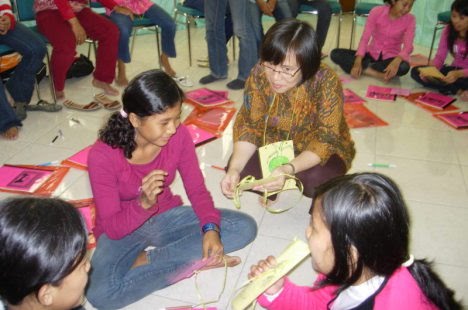
Through its various programs, Rumpun Gema Perempuan has given more than 350 workers the opportunity to get a formal education and learn trade skills such as tailoring, music and cooking.

“One of our goals is to cut down the number of child domestic helpers. That’s why our program focuses on house servants aged between 12-19 years old by giving them skills training,” executive director Aida Milasari says.

With ILO funding, Rumpun Gema Perempuan opened a school and training center for domestic helpers at a home in Pamulang, Tangerang, in 2009.

Seventy-five workers are currently receiving training, while 12 of these are also studying for their secondary school equivalence diploma. Classes are held on Monday, Wednesday and Thursday from 4 p.m. to 8 p.m.

Initially, the program was met with mixed feelings from both employers and household helpers.

“In some cases, the employer is all for their housemaid taking the afternoon course, but it’s the child [worker] that refuses to do it. On the other hand, there are employers who forbid their child helpers to take this course. It’s a shame, considering that most of the employers are well-educated,” says Munisa Noor, the assistant field manager at the Villa Pamulang Mas branch of the project.

Aida says that although some students are forced to leave the program, 75 percent manage to complete the training course.

Dyah Rofika, the Pamulang project manager, says that the program benefits both the workers and their employers.

As a result of the training, the employees have become more disciplined and professional — they no longer have to be woken in the morning or play with their mobile phones while they are working. And some employers who previously denied their workers from communicating with their families have since changed their stance.

A large amount of graduates have quit their jobs as domestic workers and used their training to secure better employment. The ILO has awarded 17 outstanding students scholarships to study at formal middle and vocational schools.

However, the campaign for rights of domestic workers still has a long way to go.

Rumpun Gema Perempuan has encouraged housemaids to form a union to strengthen their bargaining power and deal with issues like physical and sexual abuse.

The organization is also actively working to push a bill through the House of Representatives to regulate work hours, create a standard wage and secure employment contracts for housemaids.

Reproductive Health 101 For Students

The Jakarta Globe


“The World Starts With Me” is the title of the first chapter of a series of interactive modules developed by the World Population Foundation, which aims to teach Indonesian adolescents about sexual and reproductive health.
 
The WPF has been looking into the issue locally since 1997, in response to research that showed there was a high degree of reproductive health problems and gender-based violence in the country. The Dutch nongovernmental organization aims to provide Indonesian teenagers with balanced information about sexuality, reproductive health and gender issues.
 
One of the WPF’s most recent projects is the creation of interactive computer programs. One such program is called “My Exciting Teenage World,” or “Daku,” in which students are made aware of topics related to reproductive health through learning modules like “Is Your Body Changing Too?,” “Fight for Your Rights,” “Love Shouldn’t Hurt” and “Pregnancy: Notes for Boys and Girls.” Each module is introduced by virtual hosts. The program also makes use of quizzes and other activities.
 
The Candle of Knowledge Foundation (YPI), a local organization supported by the WPF, has been promoting the “Daku” program since 2005. With the WPF’s assistance, YPI has trained around 50 teachers from 24 senior high schools throughout Jakarta.
 
“We personally approached 50 high schools in Jakarta to talk about the program, which is made available for free, but only 24 agreed to adopt the program,” said Sari Hapsari, the program manager for YPI.
 
Titi Yuli Munaf, a guidance counselor from SMK Negeri 16, a vocational school in Central Jakarta, said she read about the program two years ago and convinced the school’s principal to adopt it.
 
“The program is exactly what the students need, especially those in their final year in school,” Titi said.
 
However, because the school has a limited number of computers, only 40 students were able to follow the interactive computer programs provided by the WPF. The other students were given lessons using a printed 16-chapter module.
 
In 2007, the WPF introduced similar interactive sex education programs for students with disabilities. One of the programs, “Reproductive Health Media for Deaf Youth” (“Maju”), is now being used in three schools that specialize in teaching the hearing impaired.
 
Siti Rahayu, the principal of Santi Rama school for the hearing impaired in Cipete, South Jakarta, said that she was skeptical of the WPF program at first.
 
“I wondered if they knew what they were talking about,” she said. “But when we started working together and preparing the modules, I began to think that the subject matter was good for our students.”
 
Nanik Sri Wahyuni, a reproductive health coordinator at Taman Harapan vocational school for the blind in Keramat Jati, East Jakarta, said the program fit the needs of the students because they were involved in shaping it, along with reproductive health experts and school officials.
 
“We prepared the material together with the WPF,” Nanik said. “To make the program more suitable for students, the project was developed with the help of students themselves. In fact, two students from our school participated in preparing the program.”
 
In discussions with students, Nanik discovered that a number of students at the school between the ages of 14 and 18 were sexually active.
 
“I found it unbelievable that they were already sexually active at that age,” Nanik said. “But now, I hope things begin to change because the students are better informed about sexuality. Sometimes when they go out on a date, their friends remind them, ‘Hey, don’t forget chapter seven,’ which talks about love and sexuality.”
 
In addition to school-oriented projects, the WPF also introduced “Seru,” or “My Source of Information on Adolescence,” a sex education computer program designed for boys in juvenile correctional institutions and already being used in Tangerang, Medan and Blitar. The foundation also developed the “Me and You” program, a social skills course for preschoolers, which focuses on gender roles and the prevention of sexual abuse.
 
The WPF programs are now being run in 12 provinces — including West Nusa Tenggara, North Sumatra, East Kalimantan, Jakarta, Yogyakarta, Central Java, East Java and Bali — but the foundation hopes to expand its reach nationwide in the future.

Making a Home For Indonesian Prose Online

The Jakarta Globe


Think of us as failed short story writers,” said Prasodjo Chusnato Sukiman. “This is why we’re doing this.”

The 35-year-old was referring to sriti.com, an archive of published short stories in Bahasa Indonesia, which he co-manages with a number of avid readers.

The project traces its beginnings to the 1990s, when Chusnato and fellow students Sjaiful Masri and Taofik Hidayat used to meet under a kapok tree at the Bogor Agriculture Institute to swap books and talk about and cut out short stories published in newspapers.

Calling themselves Salju Bogor (Snow of Bogor), after the cottony fiber that floats from a burst kapok pod, their activities back then attracted the attention of Yanusa Nugroho, a short story writer who taught them literature and writing, and who also introduced them to big-name authors like Ayu Utami and Djenar Maesa Ayu.

Over the years, though, the group’s scrapbooks of short stories began to yellow and fall apart. It was then that Chusnato came up with the idea of retyping the stories and uploading them on the Internet.

“Our goal was to compile literature from print media [in one place],” he said.

Taofik designed a Web site, which they named sriti.com, after a small bird with an injured wing that they found under the kapok tree one time.

“We treated it and the next day it flew away,” Chusnato said. “It was a very moving moment.”

Sriti.com was born on Aug. 15, 2000. It was not easy at the start. “Back then, not many newspapers uploaded short stories onto their official Web sites,” Chusnato said.

Chusnato and Taofik worked on their own for three years, paying for the site’s maintenance out of their own pockets.

The Web site, however, grew steadily. More people joined the project, including Sjaiful Masri, Anggoro Gunawan and Bany Akbar, churning out weekly installments of short stories published in national newspapers like Kompas, Media Indonesia, Republika and Suara Pembaharuan, as well as local publications like Jawa Pos, Batam Pos and Pos Kupang.

Occasionally, a writer would ask to have their story removed from the site. For the most part, however, writers have had no reservations about sriti.com. It now has a collection of 3,394 short stories written by 935 authors and previously published in 53 print media outlets. Sriti.com’s popularity among Indonesian readers has prompted several publishing companies to approach the site’s moderators for a compilation of selected short stories in book form. For a time, most of the site’s moderators held out, saying they did not have the editorial authority as readers and were not as capable of story selection as members of the mainstream media.

Bany, however, had a different opinion. “He said that if we want to get involved in Indonesian literature, we have to produce something that everyone can read, not just those with access to the Internet,” Chusnato said, adding that it was also Bany’s idea to allocate the proceeds of the published project to finance maintenance for the Web site.

They decided to take up Gramedia Pustaka Utama’s offer. Early this month, “Bob Marley dan 11 Cerpen Pilihan Sriti.com 0809” (“Bob Marley and 11 Chosen Short Stories by Sriti.com 0809”) was published. The book is a compilation of 12 short stories archived from January 2008 to August 2009.

The group had initially chosen 15 stories, but had to drop three because the authors would not give permission for their stories to be included in the anthology.

Bamby Cahyadi, 40, whose short story “Aku Bercerita Dari Pesawat Yang Sedang Terbang” (“I Tell a Story From a Flying Airplane”) was previously published in the July 26, 2009, issue of Koran Tempo, said he had no problem having his work archived on sriti.com. Bamby, who manages a fast-food restaurant in Jakarta, said the Web site was “a milestone for Indonesian literature.”

“Though what they are doing seems simple enough, they nevertheless are playing a part in the development of Indonesian literature,” he said, adding that sriti.com had helped introduce readers to authors from around Indonesia who have only been published in local media.

Mirna Yulistiati, from Gramedia Pustaka Utama, said sriti.com was highly recognizable among readers. “When they can’t find a story anywhere else, they turn to sriti.com,” she said.