The Jakarta Globe
Indonesia’s Borobudur Rising From the Ashes
The Jakarta Globe
Indonesia’s Geography Holding Back Immunizations: Doctors
The Jakarta Globe
Unesco Takes Note of Indonesia’s Angklung, Grants it Cultural Heritage Title
The Jakarta Globe
Piece of Mind: When Money Talks, Unity Takes a Walk
The Jakarta Globe
When I was in elementary school in the mid-1990s, my teachers went out of their way to emphasize the national motto, Bhinneka Tunggal Ika, which translates as “Unity in Diversity.”
The motto — taken from a famous Javanese poem penned during the Majapahit kingdom in the 14th century — pertains to the fact that Indonesia is an archipelago that is rich with different cultures, tribes, religions and languages.
The motto is intended to draw on the country’s diversity as a unifying strength instead of allowing it to become divisive.
It’s a nice idea, but one that seems to be showing more and more cracks these days.
The most blatant recent examples pertain to religion and sexual orientation.
But there are other, more subtle examples that have increasingly come to my attention, mostly having to do with status and money.
Take the artists’ enclave of Ubud.
With its starring role in the best-selling book “Eat Pray Love” and the film adaptation starring Julia Roberts, it seems like everyone has been talking about Bali and how perfect it is as a tourist destination.
I lived there, among the lush rice fields of Ubud, for more than a year.
And while I love the beauty and culture of the place, I couldn’t help but get the feeling that while it was welcoming to foreigners from all over the world, this same welcome doesn’t always seem to be as warmly extended to fellow Indonesians.
As a Javanese woman dating a Western man, I sometimes felt that I was discriminated against in terms of race and gender while living there.
When I went to a restaurant or shop with my fiance, he was greeted with a warm smile and friendly words.
I, on the other hand, was largely ignored.
I found myself asking if there was something wrong with me.
Was it because my fiance was a Western man and people assumed that he had more money than me?
Or was it maybe because of the stereotype that Indonesian women who date Western men are morally compromised and are just out to squeeze some money from the man’s pockets?
If I only felt this way once or twice about the way I was treated, I could probably just brush it off.
But it happened again and again, almost anywhere we went.
I also saw it happen to other Indonesian women, even men, and it never failed to test my patience.
I eventually decided to channel my anger in a creative manner by blogging about my experiences.
I ended up getting a lot of responses and comments from readers who had experienced the same thing.
There were also some people who were surprised that this would happen, given that there are so many Indonesian tourists who visit Bali.
I have two theories about why this happens.
The first is that Bali has become spoiled by tourism money.
It seems to me as if a lot of people there have forgotten basic manners in their quest to take a bite out of the tourism pie.
My second theory is that some Balinese may simply not feel kind towards other Indonesians.
This feeling may have increased since the 2002 terrorist bombings, from which the island is still recovering today.
But it’s not just Bali. I have found that things like this happen in other parts of the country as well.
Before I moved to Jakarta, I called the owner of an apartment in Central Jakarta and tried to rent his place.
He was friendly and organized as he went over the details with me.
I agreed to all the rules and was ready to pay.
Then, oddly enough, he asked if the apartment was for me or a foreigner.
I told him it would be for me, a young Indonesian woman.
I never heard back from him until my Western friend contacted him and he responded immediately with a rental agreement.
It is quite sad that this sort of thing happens in Indonesia, especially when we are taught Bhinneka Tunggal Ika growing up.
It seems that our motto of equality and tolerance is not always reality.
Tourists from Jakarta who visit Bali may be quoted higher room rates than others.
Foreigners are usually given more friendly treatment in tourist shops and restaurants there.
They also get easy access to apartments in Jakarta.
Bhinneka Tunggal Ika is a great idea, it’s just one that doesn’t always translate into real life — especially when the equality and unity in question stem from one’s wallet.
Elisabeth Oktofani is a freelance writer.
Debt Deal Helps Mend Quake-Damaged Schools
The Jakarta Globe
Priceless Loyalty To the Sultan
The Jakarta GlobePriceless Loyalty to the Sultan
Elisabeth Oktofani & Florencia Margaretha Taruli Toruan
Yogyakarta Palace is a symbol of Javanese culture. It is also the home of Sri Sultan Hamengkubuwono X and his family.
About 3,000 abdi dalem — which loosely translates as royal servants — serve the sultan and his extended family. In return, they receive a minimal monthly salary ranging from Rp 8,000 to Rp 62,500 (90 cents to $7).
But for these royal servants, their work is not about money, but about upholding and honoring ancient Javanese traditions.
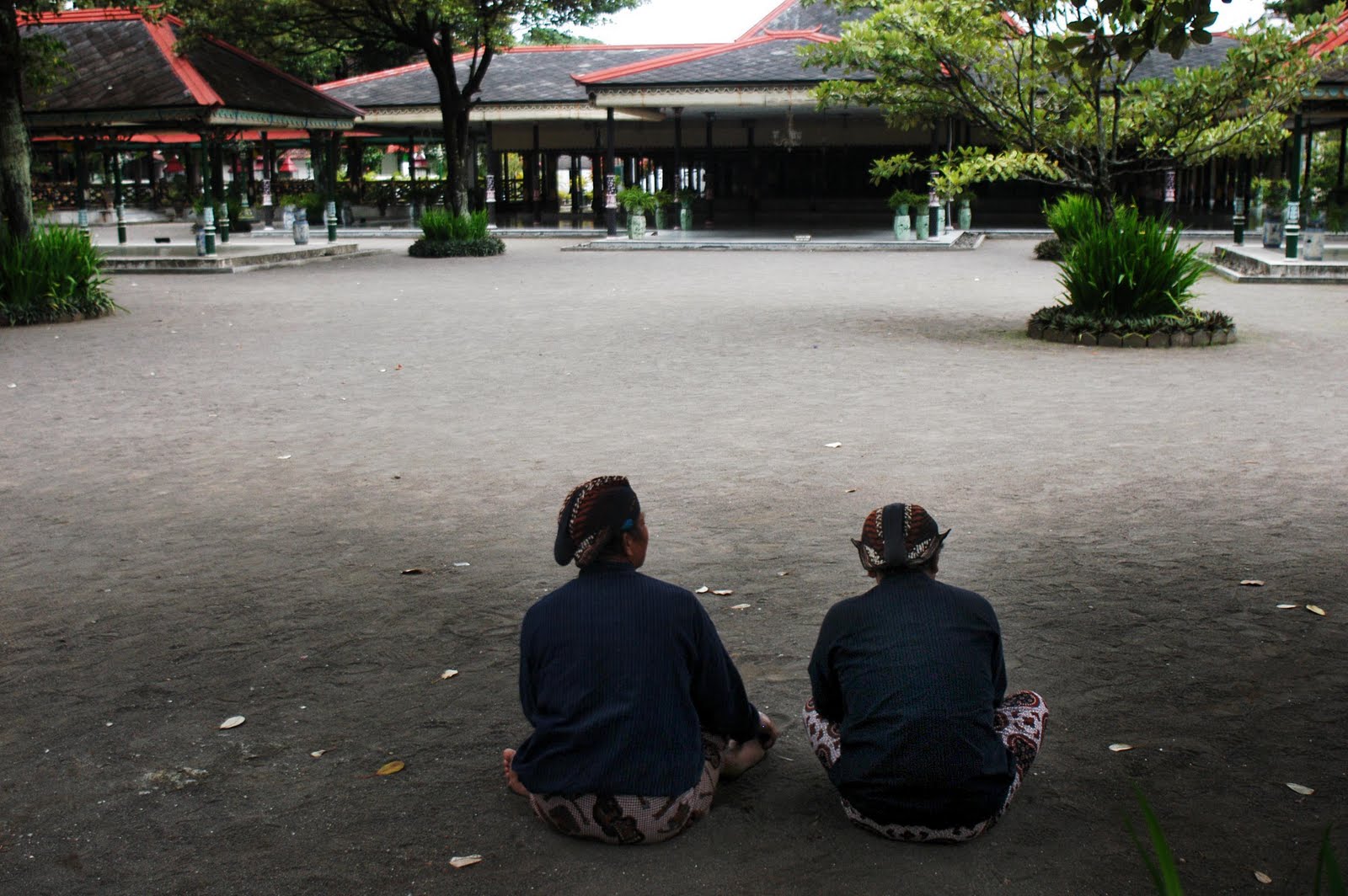
The royal guards, who are among the abdi dalem, dedicate their time to Ngarso Dalem, a term they use to refer to the Yogyakarta sultan.
Aji Triman, 43, who is dressed in kain pranakan — a dark blue fabric with a pattern of three vertical lines typically worn by the royal guards — said he was inspired to become an abdi dalem after having recurring dreams.
“One night, I dreamed about GKR Hemas,” Aji said, referring to the current sultaness of Yogyakarta. “In my dream, I helped her catch a very big fish in the pond.
“After I gave her the fish, she said, ‘Would you like to help me find one more fish?’ I said yes and left to find another fish. But when I left, I suddenly woke up. The dream was a sign for me to dedicate myself to the sultan’s palace and his family.”
Bekel Djoko Tjermo, 57, has been working as an abdi dalem since 1985 and believes that his path in life has nothing to do with how much money he earns.
“I can feel the blessing from Ngarso Dalem, which makes my life easier,” Djoko said. “That is what I earn, actually.
“Every month, I get paid Rp 8,000 by the sultanate. I work twice a week, in two three-hour shifts,” he said.
Along with his Rp 8,000, Djoko added that the money he earned from his small business and from presiding over traditional Javanese weddings was sufficient to cover his family’s needs.
“In fact, it is a lot. I can send my children to university, I own a house and I can also feed my family three times a day.”
Ngabehi Margowikarto, 78, has been registered as an abdi dalem since 1990, when he retired as a civil servant for the railway company.
Margowikarto, who is also known as Djumakir, said he enjoyed his duties as an abdi dalem more that his previous job with the railway company.
“Actually, I cannot really sit still at home and do nothing. I want to dedicate myself to Ngarso Dalem, find new activities to do and make new friends,” said Djumakir, adding that one of his favorite duties is to help tourists who visit the palace.
Gusti Bendoro Pangeran Haryo Joyokusumo, who is in charge of paying the abdi dalem, said the Yogyakarta Sultanate is currently working on a new salary scheme for the servants.
“The salary of the abdi dalem actually cannot really be called a salary, but rather it is an ucah dalem [the term for salary or stipend in the palace] because it does not reach the regional minimum wage rate for Yogyakarta, which is Rp 745,694 per month,” Joyokusumo said.
“Some abdi dalem, do not spend the ucah dalem from the sultan’s palace, but keep it as a talisman for luck.”
Joyokusumo explained that under the new structure of ucah dalem, the sultanate is planning to hand out allowances based on each abdi dalem’s duties and length of service, which will affect how much they received for transportation, for their families, as well as for their daily fees.
But in order to implement the new system, the sultanate has to determine the rank of each of the 3,000 abdi dalem.
“The only problem that we have right now is that we need to register all the abdi dalem electronically. [Currently], the manual registration logbook is still being used,” Joyokusumo said.
“Once we have them computerized, we can give them the new ucah dalem based on their individual professional levels. As guardians of Javanese tradition, the abdi dalem receive a quality education in Javanese culture,” he added.
Joyokusumo said the sultanate recruited new abdi dalem twice a year and all Indonesians could apply, as long as they were willing to learn, understand and implement Javanese culture and tradition.
“We have two grades of education for abdi dalem. First grade is an introduction of general knowledge about the Yogyakarta Sultanate and Javanese tradition, while the second grade concerns leadership,” he said.
According to Joyokusumo, each grade consists of eight training sessions and the abdi dalem receive career advancement as well as additional ucah dalem after successfully passing each level.
However, it can be difficult to sell a job that pays Rp 8,000 month, especially to young people.
Heirwid Benny Sulistriono, 23, a student at Gadjah Mada University, said that while he would like to be an abdi dalem, the low salary was an issue.
“To be realistic, how can you live on less than $10 a month? Let me say that I have priorities in my life,” he said.
“My priority at the moment is once I graduate, I want to get an enjoyable job that provides a good salary, enough for meals, to have a house to live in and also to enjoy myself,” Heirwid said.
“This doesn’t mean that I wouldn’t want to be an abdi dalem if I was asked to be one. I could be an abdi dalem if the work hours were flexible. Perhaps, if I only had to work on the weekends, then I would not be bothered by the low salary.”
Febrianto Valentinus Situmeang, 22, a recent graduate from Atma Jaya University in Yogyakarta, said he had lived and studied in Yogyakarta for the last four years, and had absolutely no interest in becoming an abdi dalem.
“Yogyakarta has a special character due to it being a cultural center. But I am Batak, not Javanese,” he said.
“Even if I were Javanese, I don’t think that I would want to be an abdi dalem because it requires a high level of personal dedication.”
Joyokusumo is not worried, however, that the palace will run out of willing abdi dalem anytime soon. He said there was no lack of applications from young people who wanted to preserve Javanese tradition by becoming abdi dalem despite the low remuneration.
“It might appear that most of the abdi dalem are old,” he said. “But fortunately, every time we open recruitment, we always have young applicants between the ages of 24 and 30.”
Nation’s Gay, Transgender Community Searches for a Voice in the Mass Media
The Jakarta Globe
My Jakarta: Sri Asih, Entrepreneur and Grandmother
The Jakarta Globe
My Jakarta: Sri Asih, Entrepreneur and Grandmother
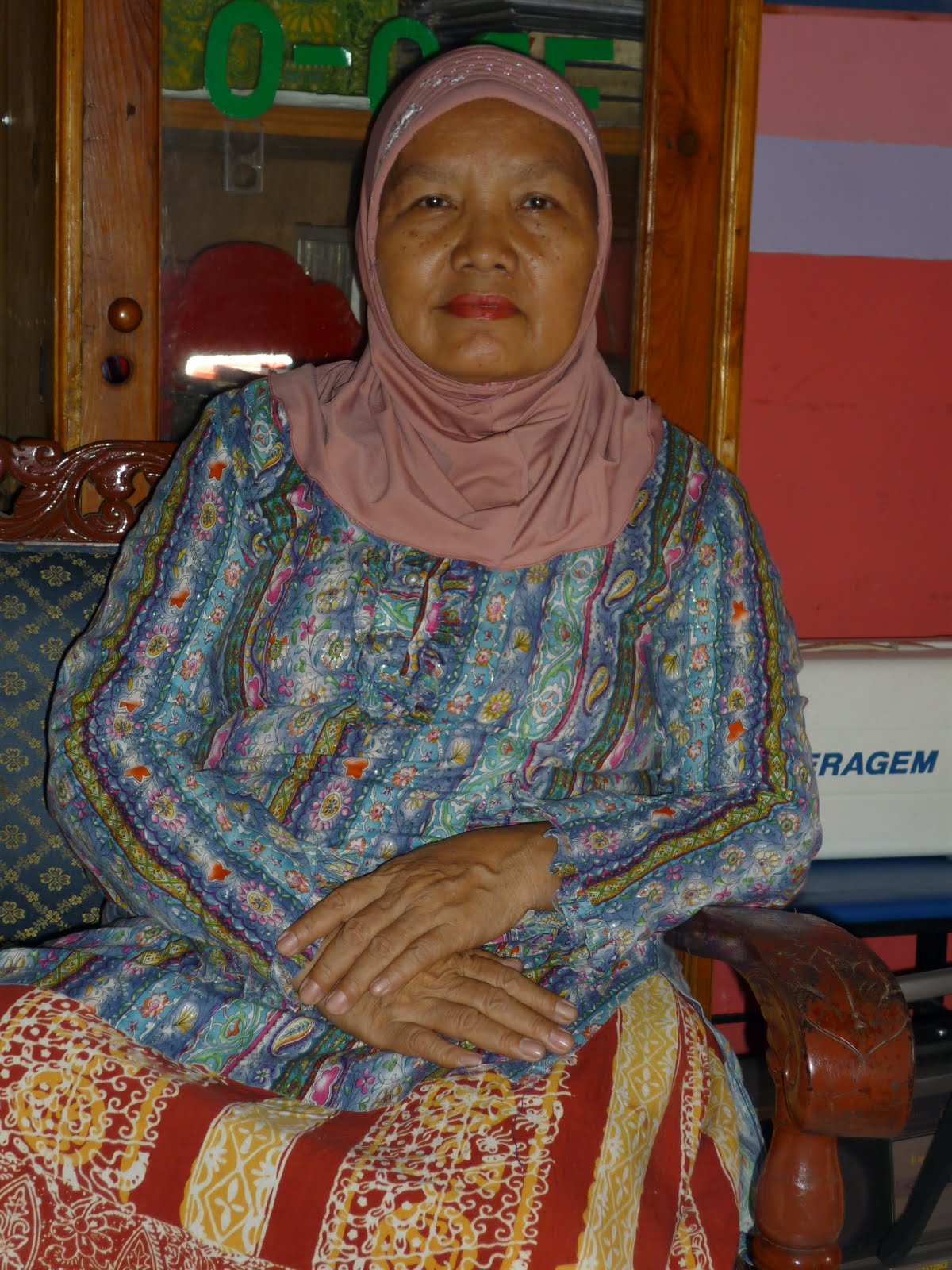
When Sri Asih isn’t celebrating the birthday of one of her 14 grandchildren with her husband, Mohammad Mupriyanto, she’s flexing her entrepreneurial muscles. Asih, 60, who moved from Sragen, Central Java, to Jakarta in 1968, has done everything from making gado-gado (salad with peanut sauce) and mopping floors to sewing buttons and serving food. Today, she explains how one of her businesses, Badut Mupri, has been bringing joy to the kids of Jakarta for 35 years, why being a clown sure beats being a criminal and how, if you can turn a frown upside down, she’s hiring.
Why did you come to Jakarta?
Most of my friends’ parents were asking them to get married at a young age. That was my worst nightmare because I wasn’t ready to get married at that stage. So I decided to leave Sragen to seek a better future in Jakarta.
How did you meet your husband?
It was one week before Idul Fitri in 1969. He had been coming to the warung [food stall] I worked at for some time and one day we had a conversation. We were both alone in Jakarta so we decided to live together and get married.
And what do the two of you do now?
My husband and I run an entertainment business, Badut Mupri [Mupri the Clown]. Actually, we started by selling handmade cardboard masks at an art bazaar in Ancol in 1975. My husband wore a mask while I stood next to him selling similar masks. He didn’t do anything funny, he just wore the mask, but people laughed anyway. It was obvious that people were hungry for entertainment. So that same day we decided to start our own entertainment business.
What was the first day of business like for Badut Mupri?
We earned Rp 70,000 in three days. And that was in 1975.
What role do you play in the business?
I’m the wife of Badut Mupri, a maker of clown costumes and also the owner of the business. I do whatever the business requires, be it acting, sewing or booking parties.
How do you promote your business?
We never really went out and advertised until my youngest son, Eko, helped us make a brochure and created a Web site for us [http://badut-mupri.com/]. But basically, the business operates by word of mouth.
Why clowns?
Clowning is a great form of entertainment. It makes people happy and puts smiles on kids’ faces. But it makes me sad when I see people dressed up like clowns just to beg for money on the street. I mean, it’s better than going out and robbing people, but it can ruin the image of clowns for kids.
Have you ever painted your face and worked alongside your husband?
Yes! One day in 1978, we had overbooked and we didn’t have enough performers to fulfill all the bookings, so I had to dress up. If I’m not mistaken, we had 19 performances scheduled for 19 different places that day. So I had to go and work at a birthday party hosted by Gen. Tjokropranolo [a former governor of Jakarta]. I went there as a duck.
How did it feel performing for everyone?
It was very strange and everybody was laughing and making fun of me. They grabbed my tail and pulled me here and there. But then again, nobody could see that it was a grown woman in the suit.
How does it feel being the wife of a clown?
Wonderful. I’m proud of it! Not only has my husband made work for himself, but he has also created jobs for others. Many people mocked my husband when he said he wanted to be a clown. They said he was crazy, but which is worse, being a clown or a criminal?
Do you have any dreams you haven’t fulfilled?
I want to build a park or a playground for children so they can expand their imaginations. I want it to be a place where kids can play and have fun, but also a place to learn.
Do you ever think about retiring?
As long as we are still able to work, we have no plans to stop making kids smile. But I expect that one of my children will take over so that the business, which started from zero, doesn’t just disappear when we retire.
Where do you find your clowns and acrobats?
We welcome anyone who is willing to work and never says I can’t do this or that, because people can accomplish anything as long as they have the will to do so. We have a place for them to stay and we have jobs for them.
Sri Asih was talking to Elisabeth Oktofani.
Tune Your Radios to a Greener Jakarta
The Jakarta Globe